
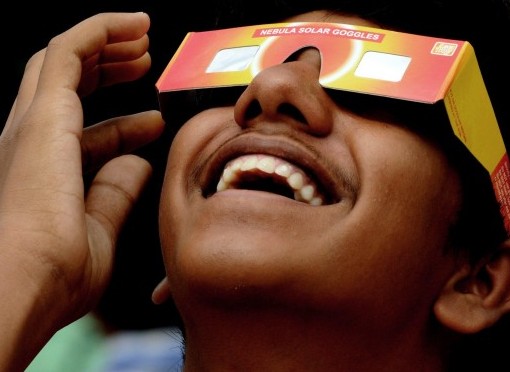
 India
India ROMA – Mercoledì 6 giugno, pochi minuti dopo mezzanotte ora italiana, il pianeta Venere è entrato nel disco del Sole, è apparso come una sorta di neo in movimento ed è lentamente sfilato davanti alla nostra stella, compiendo il tragitto in circa 6 ore e 40 minuti.
Il fenomeno, detto “transito di Venere”, è dovuto al perfetto allineamento fra il Sole, Venere e la Terra. Poiché le orbite dei due pianeti attorno alla nostra stella sono leggermente inclinate l’una rispetto all’altra, si tratta di un fenomeno estremamente raro: l’ultima volta che si è verificato risale al 2004, e per il prossimo sarà necessario attendere più di un secolo, fino all’11 dicembre del 2117.
Un’occasione unica e imperdibile, dunque. Così, dall’Asia agli Stati Uniti, in molti si sono messi gli occhiali per proteggere gli occhi dal sole e con la testa all’insù hanno osservato il fenomeno (foto Ansa e LaPresse):
 Bangkok epa03250968 Thai students looks through the lens of a telescope with solar filter and catch the transit of Venus in Bangkok, Thailand, 06 June 2012. The Venus appeared as a small black dot on the massive surface of the sun as it passed directly between the Earth and the centre of the solar system in its last transit in this century as a rare celestial spectacle. The next time Venus can be observed transiting the Sun will be in 2117. EPA/NARONG SANGNAK
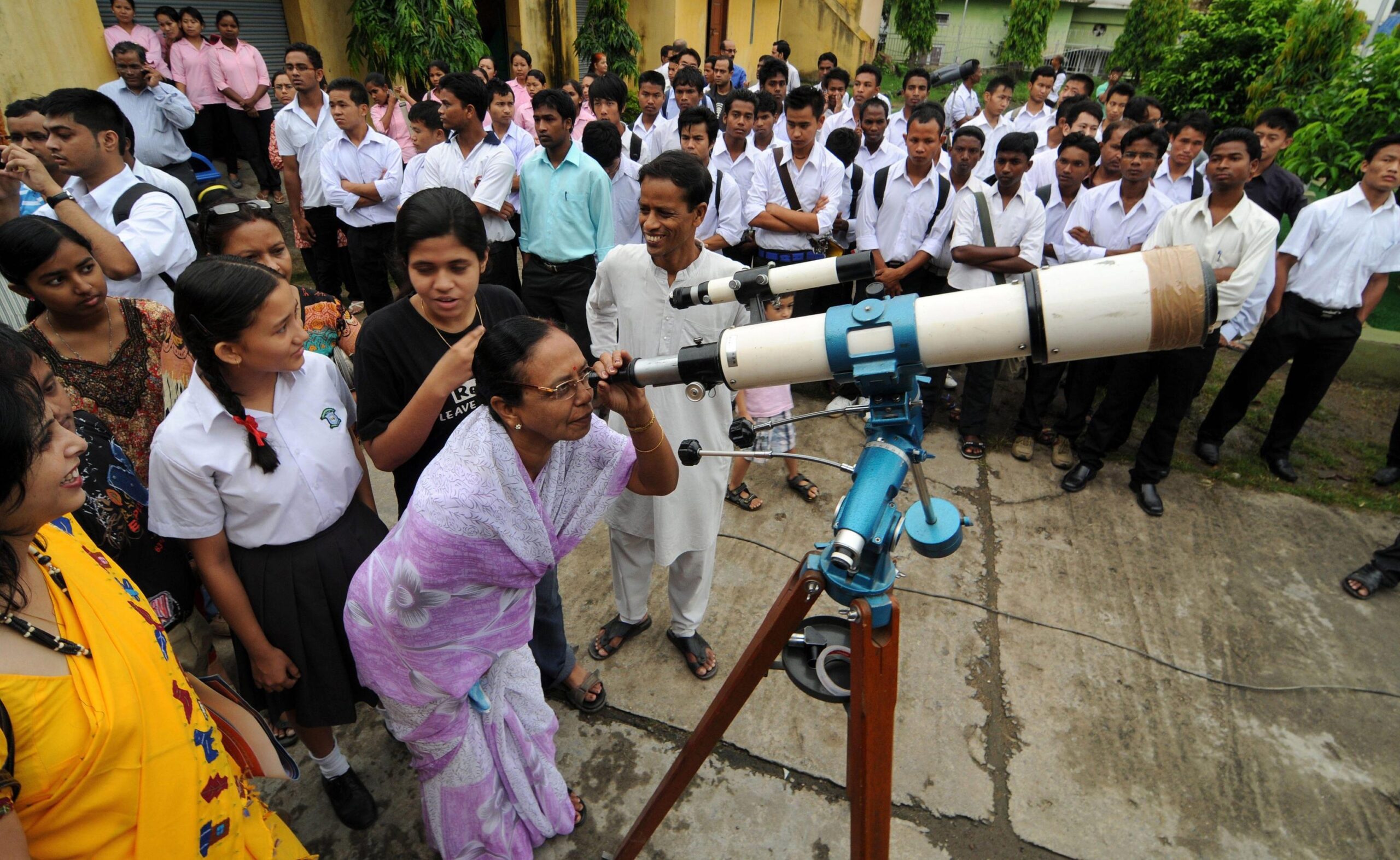 India (Epa/Ansa) A woman looks through a telescope as others wait in queue to get a glimpse of the planet Venus transiting the sun at the Guwahati Planetarium in Guwahati city, Northeast India, 06 June 2012. The second planet of the solar system Venus is seen in India as a tiny black dot traversing the face of the Sun. During transits, Venus, Earth, and the sun line up in space, causing Venus to appear as a black dot against the disc of the Sun. Transits of Venus are truly rare as a pair of such event occurs every 105.5 or 121.5 years. The last event occurred in June 2004, and the next will occur in December 2117. EPA/STR
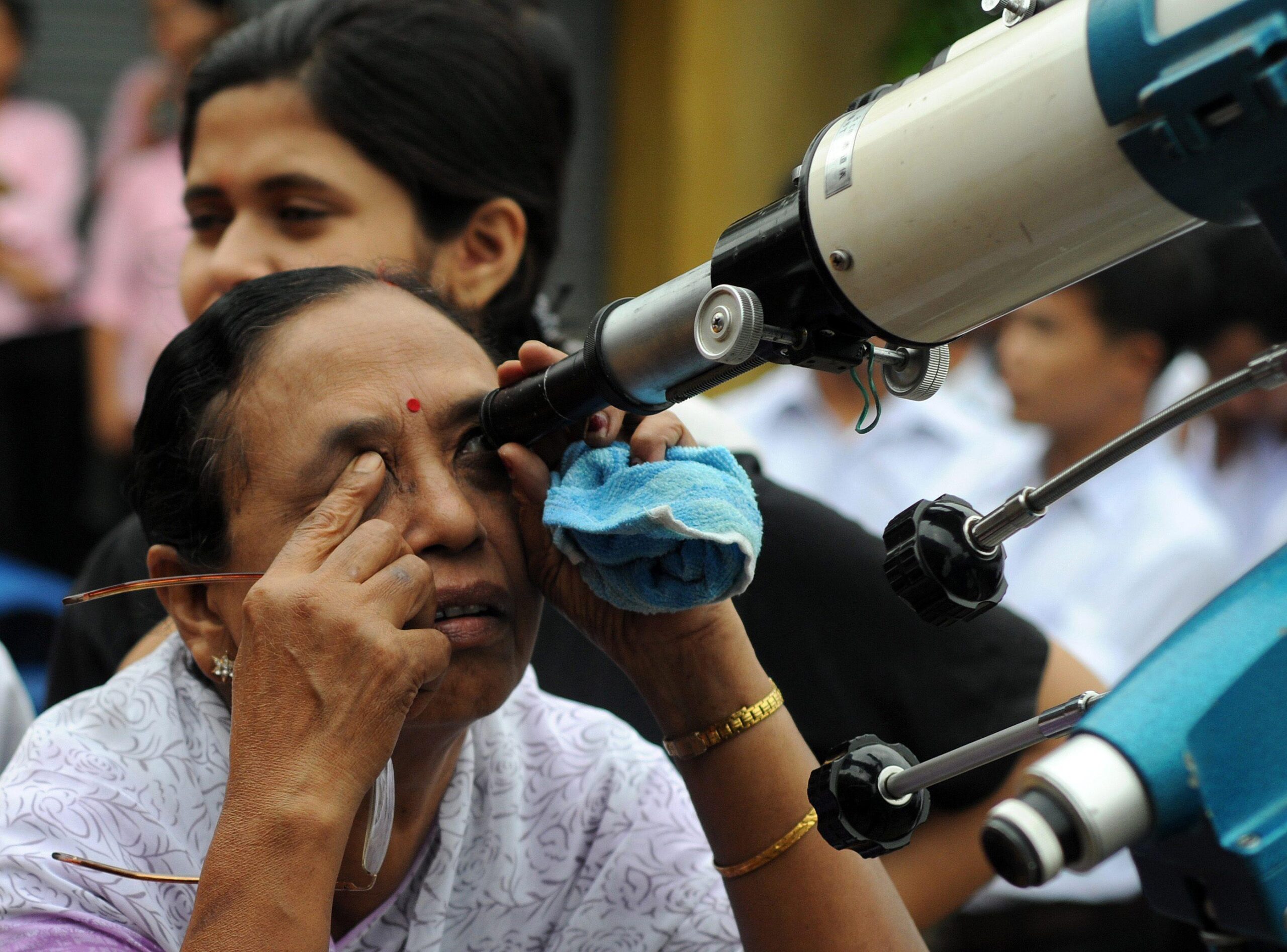 India(Epa/Ansa) A woman looks through a telescope as others wait in queue to get a glimpse of the planet Venus transiting the sun at the Guwahati Planetarium in Guwahati city, Northeast India, 06 June 2012. The second planet of the solar system Venus is seen in India as a tiny black dot traversing the face of the Sun. During transits, Venus, Earth, and the sun line up in space, causing Venus to appear as a black dot against the disc of the Sun. Transits of Venus are truly rare as a pair of such event occurs every 105.5 or 121.5 years. The last event occurred in June 2004, and the next will occur in December 2117. EPA/STR
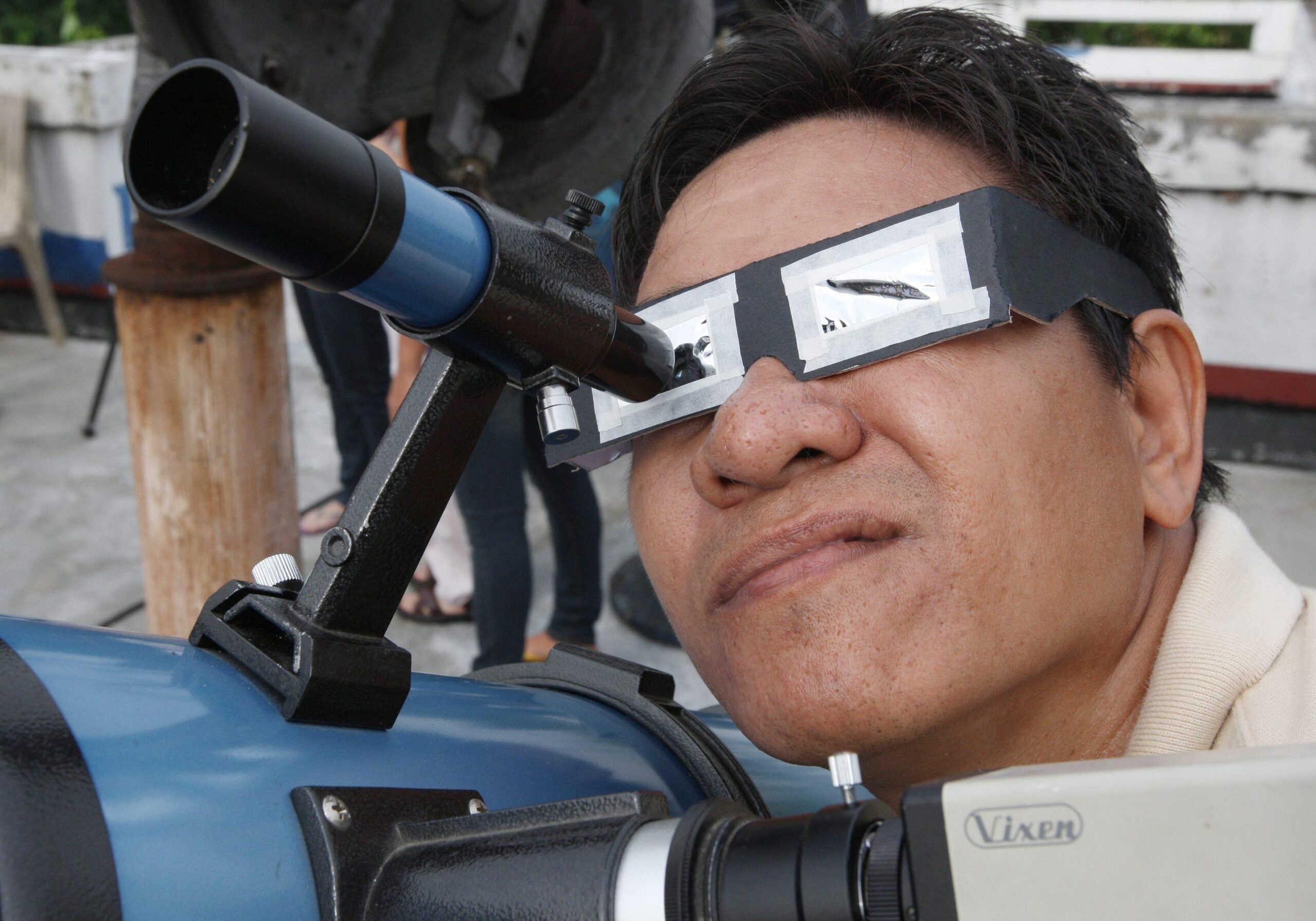 Filippine(Epa/Ansa) A Filipino watches the Venus transit through filtered glasses and a telescope at the Philippine Geophysical and Atmospherical Services Administration observatory in Quezon City, east of Manila, Philippines, 06 June 2012. Astronomy enthusiasts all over Asia looked to the skies on 06 June to watch the planet Venus crawl across the face of the sun in a rare celestial spectacle that will not happen again for more than a century. Venus appeared as a small black dot on the massive surface of the sun as it passed directly between the Earth and the center of the solar system in its last transit in this century. The next time Venus can be observed transiting the Sun will be in 2117. EPA/ROLEX DELA PENA
 BangkokEpa/Ansa A Thai student use special protective glasses to watch the transit of Venus in Bangkok, Thailand, 06 June 2012. The Venus appeared as a small black dot on the massive surface of the sun as it passed directly between the Earth and the centre of the solar system in its last transit in this century as a rare celestial spectacle. The next time Venus can be observed transiting the Sun will be in the year 2117.
  New Mexico June 5, 2012 - Albuquerque, New Mexico, U.S. - Congressman MARTIN HEINRICH with his wife JULIE and their sons MICHA, 5 (center), and CARTER, 9, check out the Transit of Venus from his campaign headquarters. (Credit Image: Jim Thompson/Albuquerque Journal/ZUMAPRESS.com) LaPresse
 Hong kong Hong Kong stargazers use special sunglasses to observe the transit of Venus along the Victoria Habour in Hong Kong Wednesday, June 6, 2012. Stargazers around the world are setting up special telescopes and passing out cardboard eclipse glasses to view the once-in-a-lifetime celestial cameo of Venus passing in front of the sun. (AP Photo/Vincent Yu) LaPresse