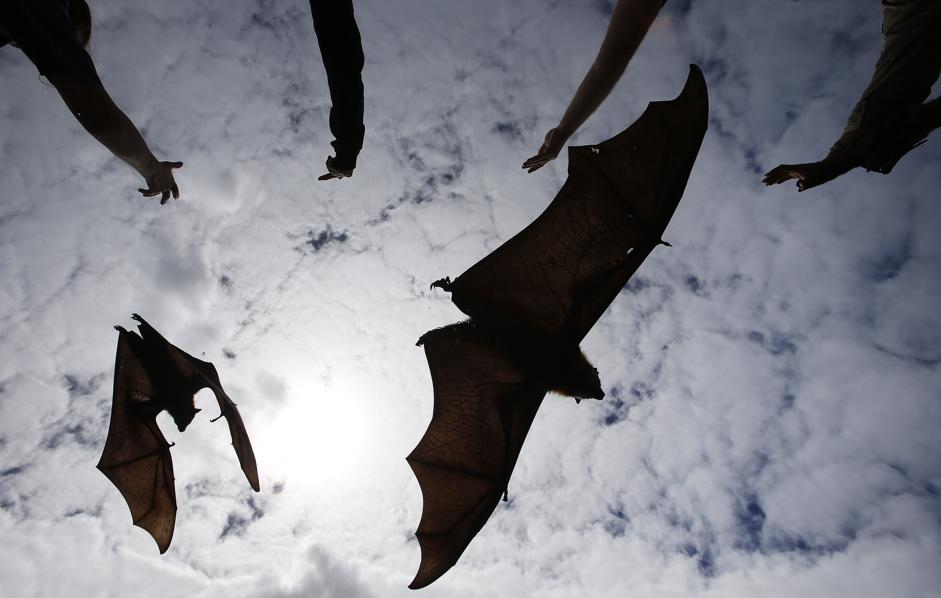
SYDNEY – I pipistrelli giganti feriti, in Australia vengono considerati come una specie vulnerabile. Gli animali vengono così raccolti e curati al Centennial Park di Sydney. In questa gallery, si vede il momento in cui questi animali vengono rilasciati dopo essere stati curati.
Questi pipistrelli della specie Pteropus poliocephalus, sono chiamati “flying fox” (volpi volanti dalla testa grigia), vivono in Australia orientale, possono arrivare sino a un chilo di peso e si nutrono solo di fiori e frutta.
Questi uccelli sono molto noti in Australia. Andando ad esempio a passeggiare nel parco intorno all’Opera House di Sydney, si possono vedere decine di pipistrelli giganti che riposano a testa in giù attaccati agli eucalipti (foto Ap)
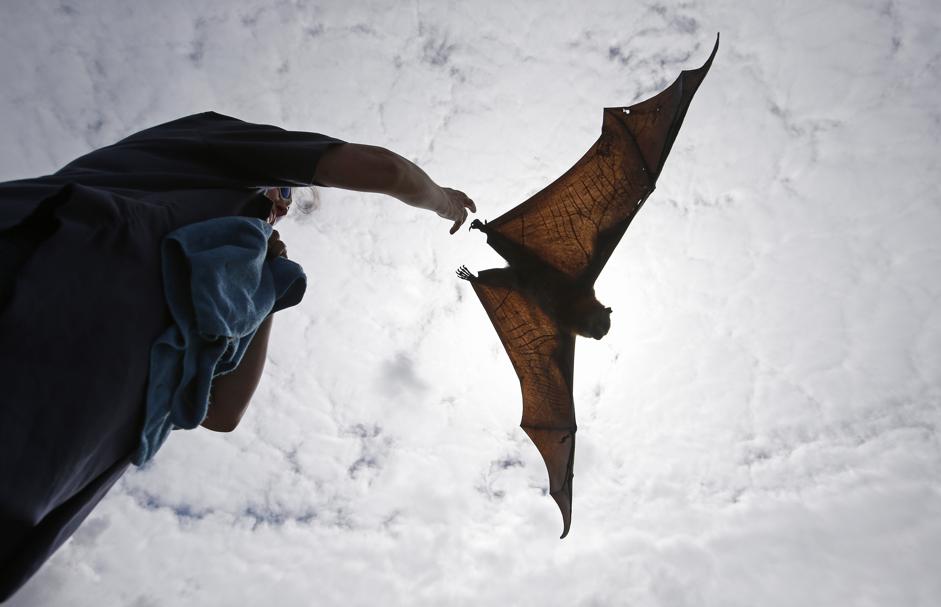 A wildlife carer releases a Grey Headed Flying Fox in Centennial Park in Sydney, Australia, Wednesday, Feb. 5, 2014. Each year thousands of native wildlife are rescued by volunteers when anti bird netting thrown loosely over fruit trees entangles birds, bats, and reptiles. The Grey Headed Flying Fox is classified as Vulnerable to extinction by the NSW Department of Environment & Heritage.(AP Photo/Rob Griffith)
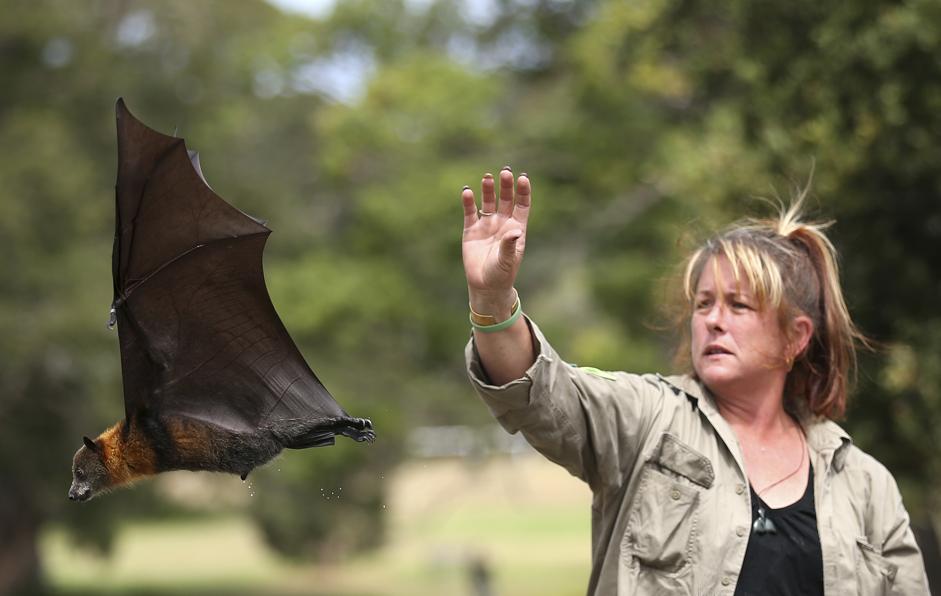 Wildlife carer Justine Coplin releases a Grey Headed Flying Fox in Centennial Park in Sydney, Australia, Wednesday, Feb. 5, 2014. Each year thousands of native wildlife are rescued by volunteers when anti bird netting thrown loosely over fruit trees entangles birds, bats, and reptiles. The Grey Headed Flying Fox is classified as Vulnerable to extinction by the NSW Department of Environment & Heritage.(AP Photo/Rob Griffith)
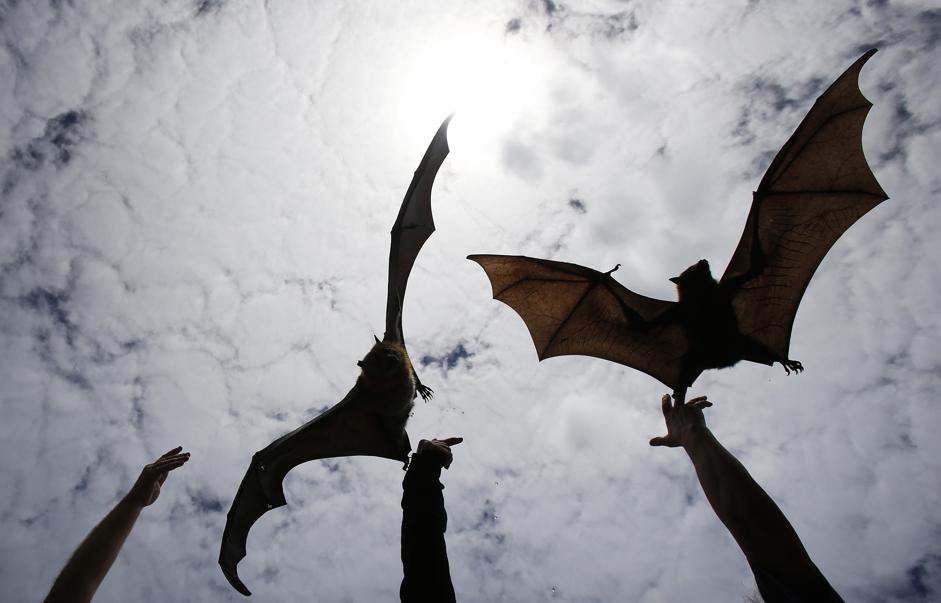 A wildlife carers release a Grey Headed Flying Fox, also known as fruitbat, in Centennial Park in Sydney, Australia, Wednesday, Feb. 5, 2014. Each year thousands of native wildlife are rescued by volunteers when anti bird netting thrown loosely over fruit trees entangles birds, bats, and reptiles. The Grey Headed Flying Fox is classified as Vulnerable to extinction by the NSW Department of Environment & Heritage.(AP Photo/Rob Griffith)