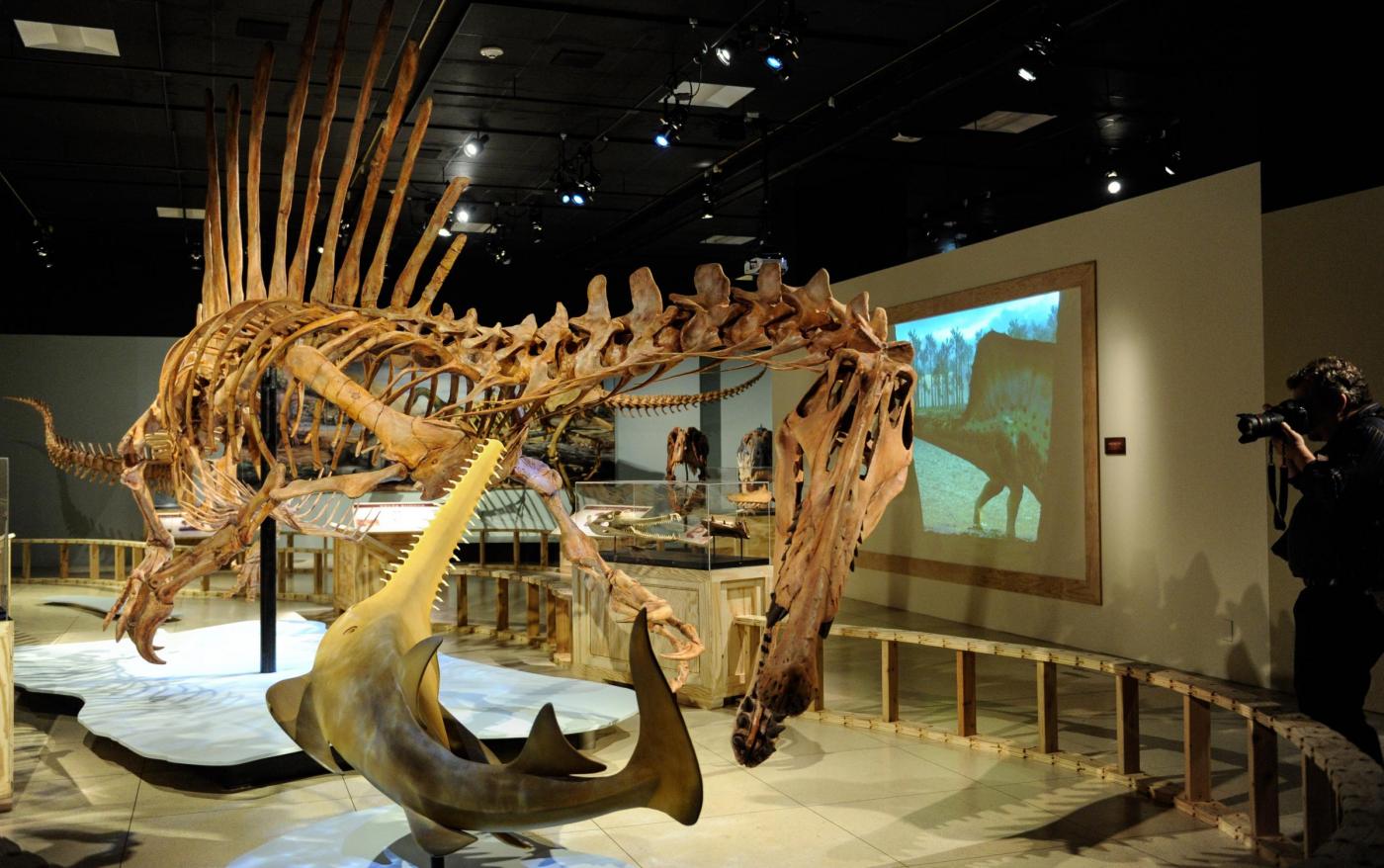
WASHINGTON – Lo spinosauro aegyptiacus, un dinosauro vissuto durante il Cretaceo nell’attuale Nordafrica, era più grande del T Rex e sapeva nuotare. La scoperta arriva da un team formato da quattro scienziati. Tra loro anche due italiani, Cristiano dal Sasso e Simone Maganuco del museo di storia naturale di Milano, centro che ospita il cranio di spinosauro più completo del mondo.
La ricerca, finanziata da National Geographic, è stata coordinata dall’università di Chicago e sarà al centro del numero di ottobre della rivista, che ha aperto una mostra dedicata al predatore presso la sua sede a Washington. Il modello di dinosauro in tre dimensioni è stato realizzato in Italia, ed è finito poi in esposizione nella capitale statunitense. L’analisi digitale dei reperti fossili ha mostrato una serie di adattamenti molto particolari, ha scritto il team in un articolo pubblicato sulla rivista Science. L’animale infatti aveva ossa particolarmente dense, senza le cavità tipiche dei dinosauri predatori, ma più simili invece a quelle dei pinguini. Le zampe posteriori poi erano corte e robuste, molto adatte al nuoto.
Le foto dello scheletro di Spinosauro esposto al National Geographic Museum di Washington (LaPresse)
(140912) -- WASHINGTON D.C., Sept. 12, 2014 (Xinhua) -- The real jaw bone (L) of Spinosaurus aegyptiacus is showed on an exhibition "Spinosaurus: Lost Giant of the Cretaceous", featuring a life-sized skeletal model of Spinosaurus, at National Geographic Museum in Washington D.C., capital of the United States, Sept. 11, 2014. Scientists on Thursday unveiled what appears to be the first truly semiaquatic dinosaur, saying the monster may have spent much of its life in Africa's ancient "river of giants", feeding on giant sharks, sawfish and lungfish and other aquatic prey. (Xinhua/Bao Dandan) (140912) -- WASHINGTON D.C., Sept. 12, 2014 (Xinhua) -- An exhibition "Spinosaurus: Lost Giant of the Cretaceous", featuring a life-sized skeletal model of Spinosaurus, is unveiled at National Geographic Museum in Washington D.C., capital of the United States, Sept. 11, 2014. Scientists on Thursday unveiled what appears to be the first truly semiaquatic dinosaur, saying the monster may have spent much of its life in Africa's ancient "river of giants", feeding on giant sharks, sawfish and lungfish and other aquatic prey. (Xinhua/Bao Dandan) (140912) -- WASHINGTON D.C., Sept. 12, 2014 (Xinhua) -- An exhibition "Spinosaurus: Lost Giant of the Cretaceous", featuring a life-sized skeletal model of Spinosaurus, is unveiled at National Geographic Museum in Washington D.C., capital of the United States, Sept. 11, 2014. Scientists on Thursday unveiled what appears to be the first truly semiaquatic dinosaur, saying the monster may have spent much of its life in Africa's ancient "river of giants", feeding on giant sharks, sawfish and lungfish and other aquatic prey. (Xinhua/Bao Dandan) (140912) -- WASHINGTON D.C., Sept. 12, 2014 (Xinhua) -- Paleontologist Paul Sereno (L 2nd) from the University of Chicago interprets the structure of the head of Spinosaurus aegyptiacus during an exhibition "Spinosaurus: Lost Giant of the Cretaceous", featuring a life-sized skeletal model of Spinosaurus, at National Geographic Museum in Washington D.C., capital of the United States, Sept. 11, 2014. Scientists on Thursday unveiled what appears to be the first truly semiaquatic dinosaur, saying the monster may have spent much of its life in Africa's ancient "river of giants", feeding on giant sharks, sawfish and lungfish and other aquatic prey. (Xinhua/Bao Dandan) (140912) -- WASHINGTON D.C., Sept. 12, 2014 (Xinhua) -- An exhibition "Spinosaurus: Lost Giant of the Cretaceous", featuring a life-sized skeletal model of Spinosaurus, is unveiled at National Geographic Museum in Washington D.C., capital of the United States, Sept. 11, 2014. Scientists on Thursday unveiled what appears to be the first truly semiaquatic dinosaur, saying the monster may have spent much of its life in Africa's ancient "river of giants", feeding on giant sharks, sawfish and lungfish and other aquatic prey. (Xinhua/Bao Dandan) (140912) -- WASHINGTON D.C., Sept. 12, 2014 (Xinhua) -- The real bone claw of Spinosaurus aegyptiacus is showed on an exhibition "Spinosaurus: Lost Giant of the Cretaceous", featuring a life-sized skeletal model of Spinosaurus, at National Geographic Museum in Washington D.C., capital of the United States, Sep 11, 2014. Scientists on Thursday unveiled what appears to be the first truly semiaquatic dinosaur, saying the monster may have spent much of its life in Africa's ancient "river of giants", feeding on giant sharks, sawfish and lungfish and other aquatic prey. (Xinhua/Bao Dandan) (140912) -- WASHINGTON D.C., Sept. 12, 2014 (Xinhua) -- An exhibition "Spinosaurus: Lost Giant of the Cretaceous", featuring a life-sized skeletal model of Spinosaurus, is unveiled at National Geographic Museum in Washington D.C., capital of the United States, Sept. 11, 2014. Scientists on Thursday unveiled what appears to be the first truly semiaquatic dinosaur, saying the monster may have spent much of its life in Africa's ancient "river of giants", feeding on giant sharks, sawfish and lungfish and other aquatic prey. (Xinhua/Bao Dandan) (140912) -- WASHINGTON D.C., Sept. 12, 2014 (Xinhua) -- An exhibition "Spinosaurus: Lost Giant of the Cretaceous", featuring a life-sized skeletal model of Spinosaurus, is unveiled at National Geographic Museum in Washington D.C., capital of the United States, Sept. 11, 2014. Scientists on Thursday unveiled what appears to be the first truly semiaquatic dinosaur, saying the monster may have spent much of its life in Africa's ancient "river of giants", feeding on giant sharks, sawfish and lungfish and other aquatic prey. (Xinhua/Bao Dandan)

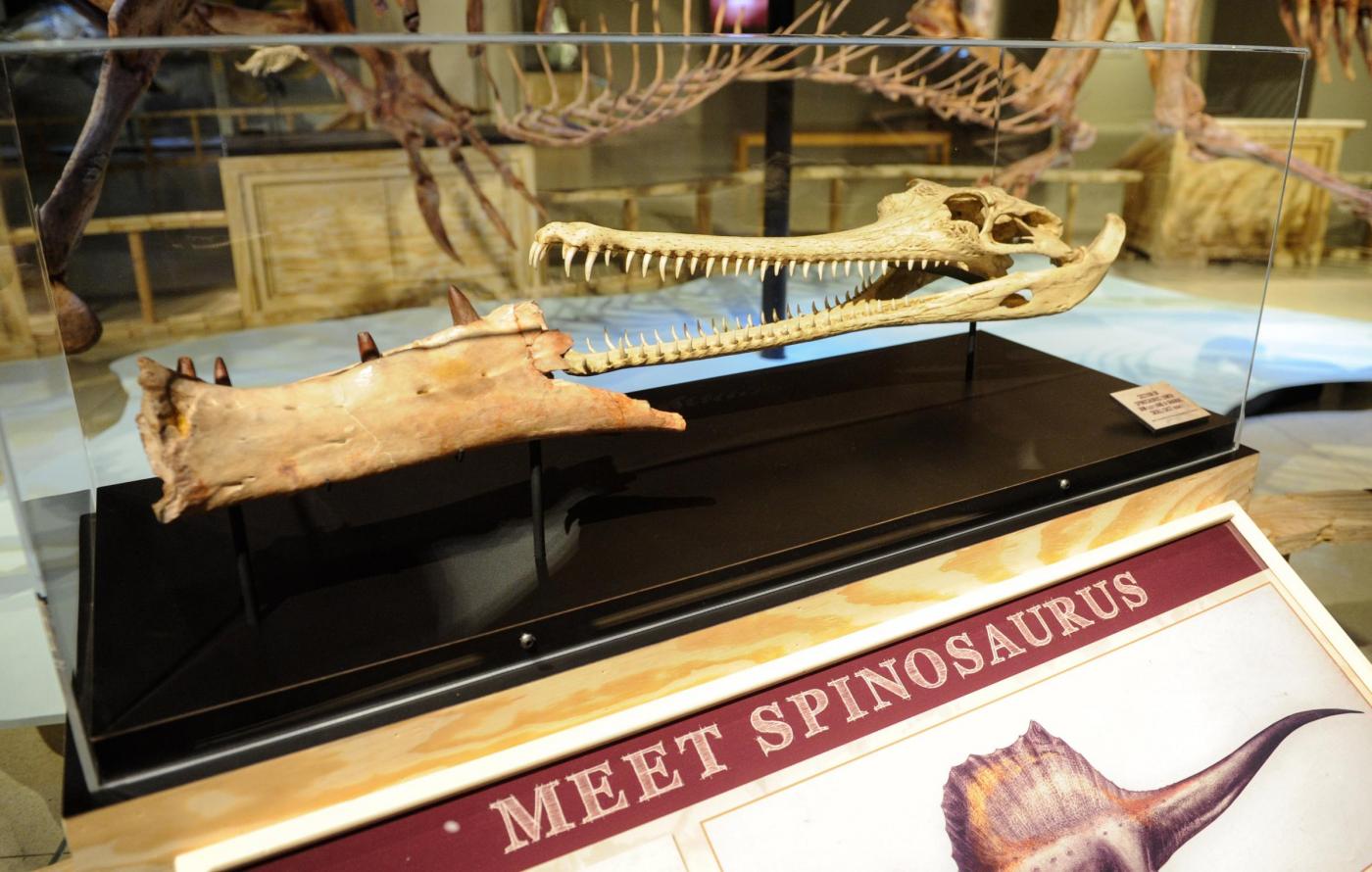 (140912) -- WASHINGTON D.C., Sept. 12, 2014 (Xinhua) -- The real jaw bone (L) of Spinosaurus aegyptiacus is showed on an exhibition "Spinosaurus: Lost Giant of the Cretaceous", featuring a life-sized skeletal model of Spinosaurus, at National Geographic Museum in Washington D.C., capital of the United States, Sept. 11, 2014. Scientists on Thursday unveiled what appears to be the first truly semiaquatic dinosaur, saying the monster may have spent much of its life in Africa's ancient "river of giants", feeding on giant sharks, sawfish and lungfish and other aquatic prey. (Xinhua/Bao Dandan)
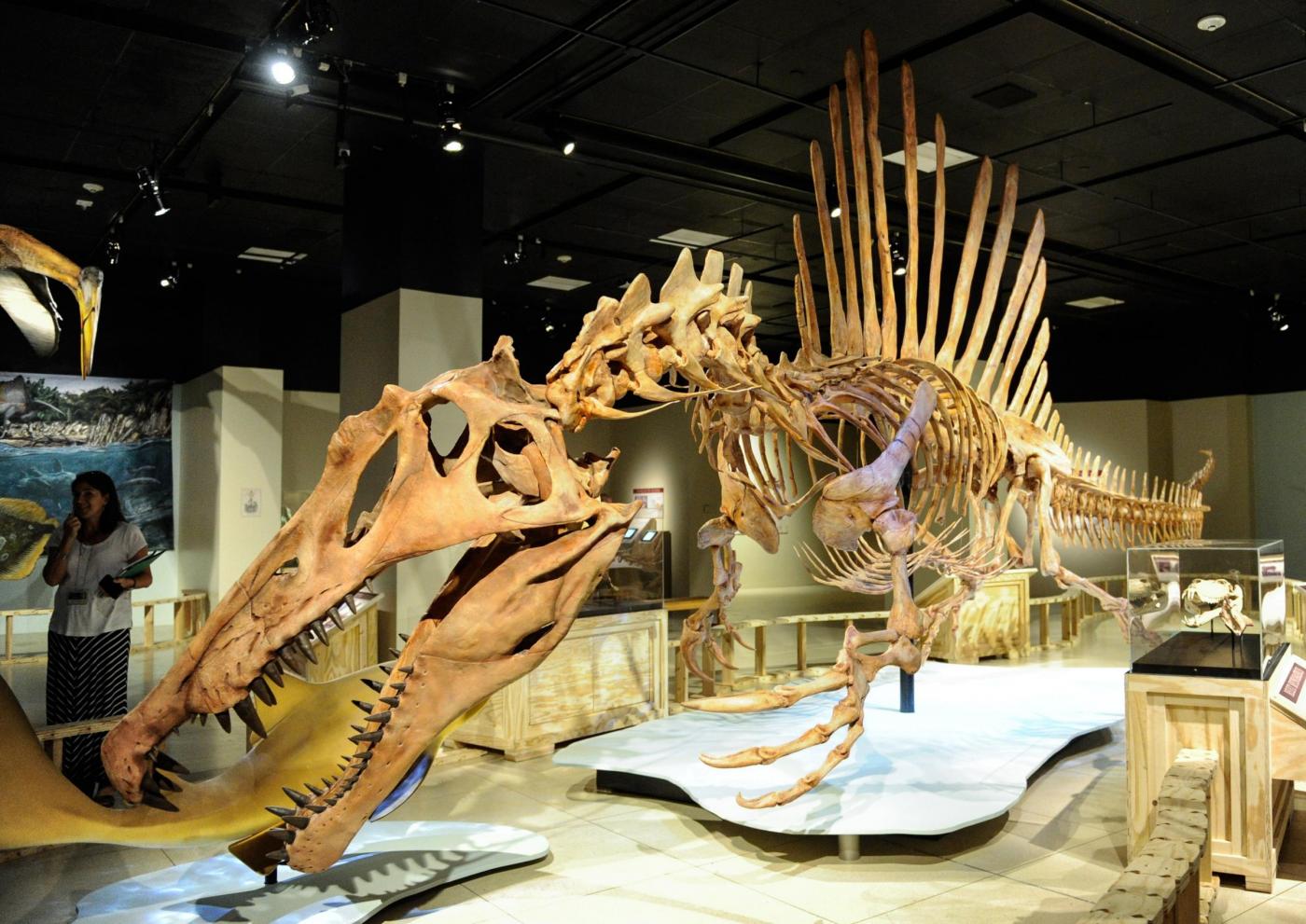 (140912) -- WASHINGTON D.C., Sept. 12, 2014 (Xinhua) -- An exhibition "Spinosaurus: Lost Giant of the Cretaceous", featuring a life-sized skeletal model of Spinosaurus, is unveiled at National Geographic Museum in Washington D.C., capital of the United States, Sept. 11, 2014. Scientists on Thursday unveiled what appears to be the first truly semiaquatic dinosaur, saying the monster may have spent much of its life in Africa's ancient "river of giants", feeding on giant sharks, sawfish and lungfish and other aquatic prey. (Xinhua/Bao Dandan)
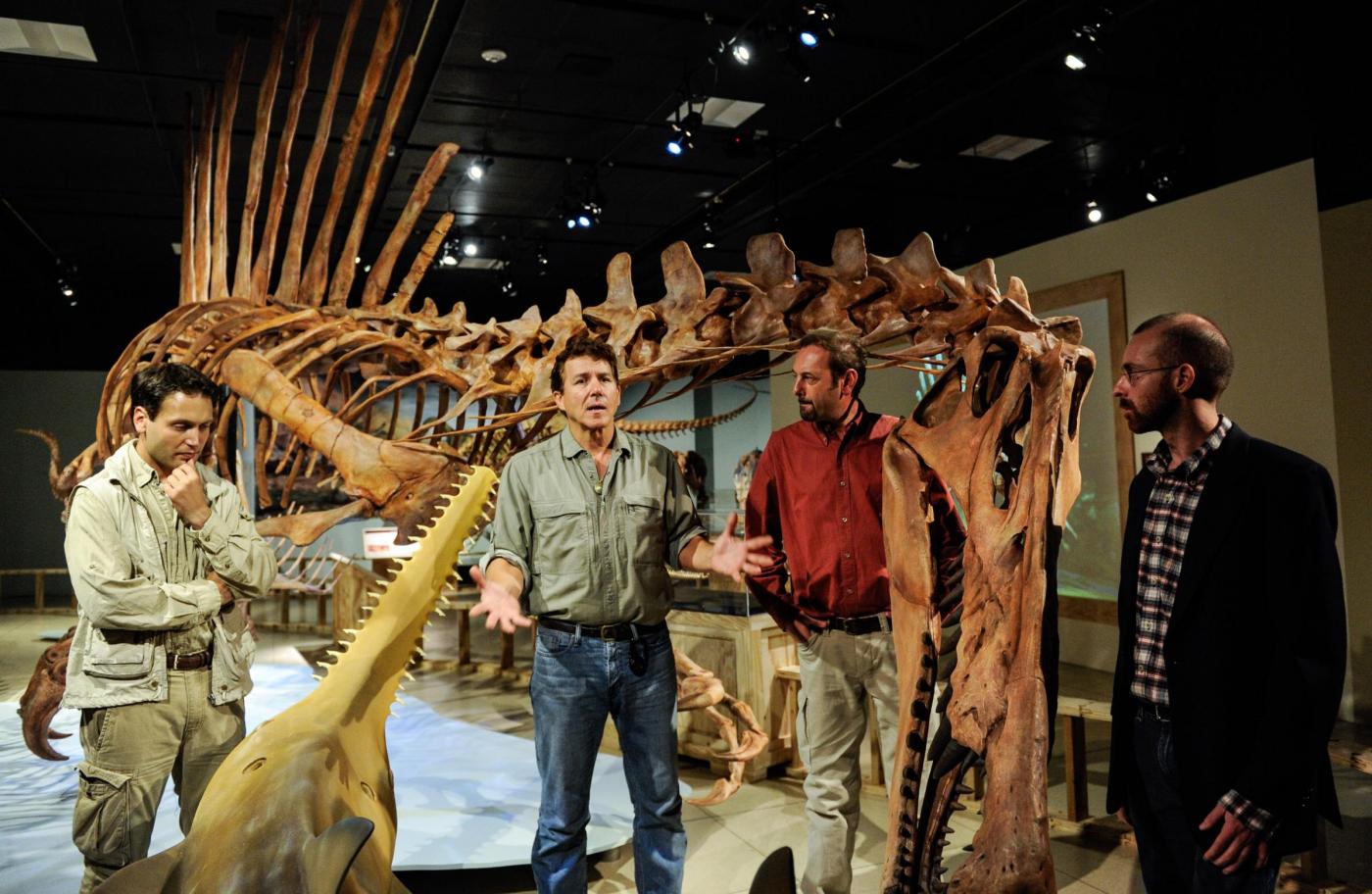 (140912) -- WASHINGTON D.C., Sept. 12, 2014 (Xinhua) -- Paleontologist Paul Sereno (L 2nd) from the University of Chicago interprets the structure of the head of Spinosaurus aegyptiacus during an exhibition "Spinosaurus: Lost Giant of the Cretaceous", featuring a life-sized skeletal model of Spinosaurus, at National Geographic Museum in Washington D.C., capital of the United States, Sept. 11, 2014. Scientists on Thursday unveiled what appears to be the first truly semiaquatic dinosaur, saying the monster may have spent much of its life in Africa's ancient "river of giants", feeding on giant sharks, sawfish and lungfish and other aquatic prey. (Xinhua/Bao Dandan)
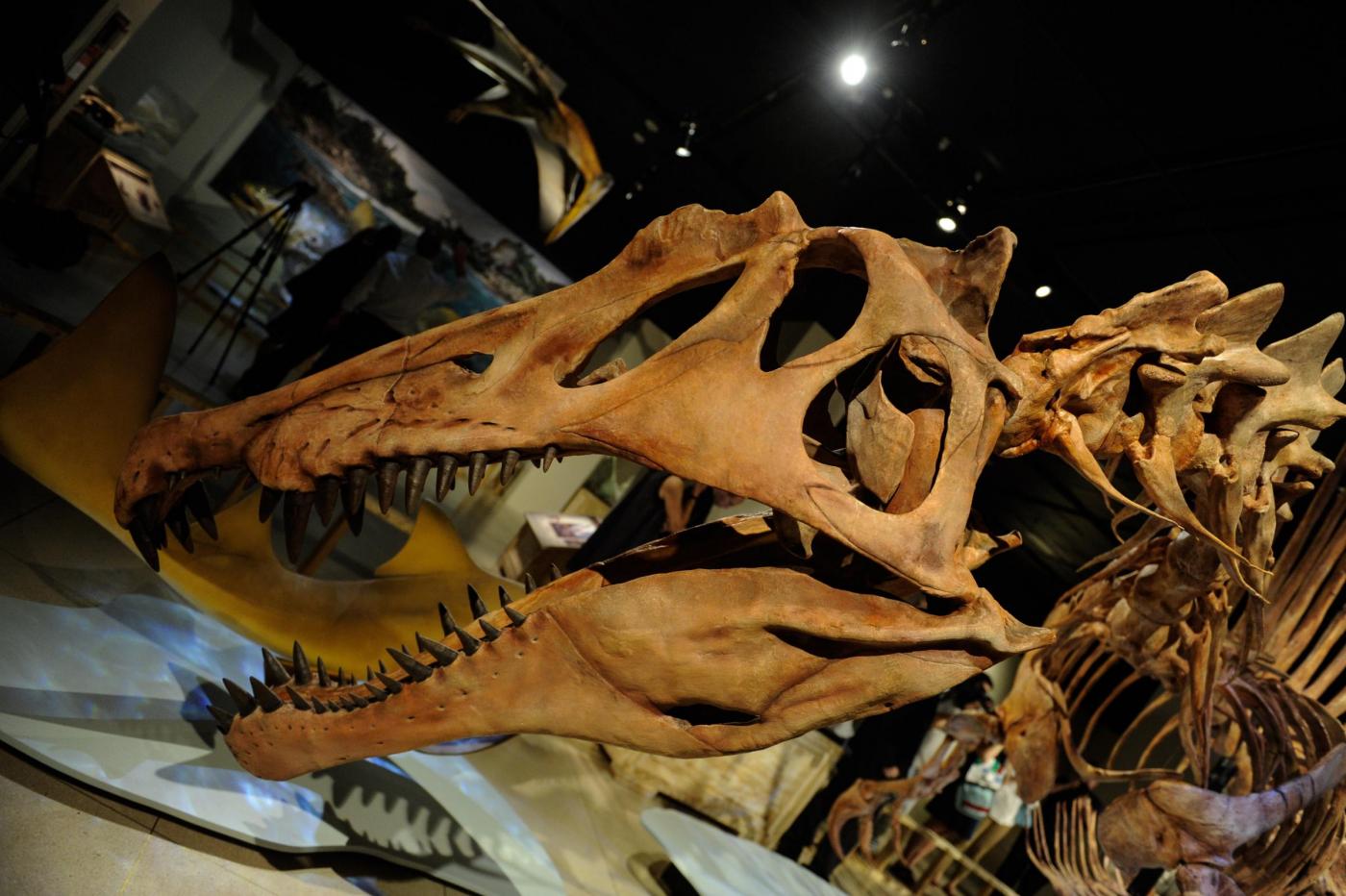 (140912) -- WASHINGTON D.C., Sept. 12, 2014 (Xinhua) -- An exhibition "Spinosaurus: Lost Giant of the Cretaceous", featuring a life-sized skeletal model of Spinosaurus, is unveiled at National Geographic Museum in Washington D.C., capital of the United States, Sept. 11, 2014. Scientists on Thursday unveiled what appears to be the first truly semiaquatic dinosaur, saying the monster may have spent much of its life in Africa's ancient "river of giants", feeding on giant sharks, sawfish and lungfish and other aquatic prey. (Xinhua/Bao Dandan)
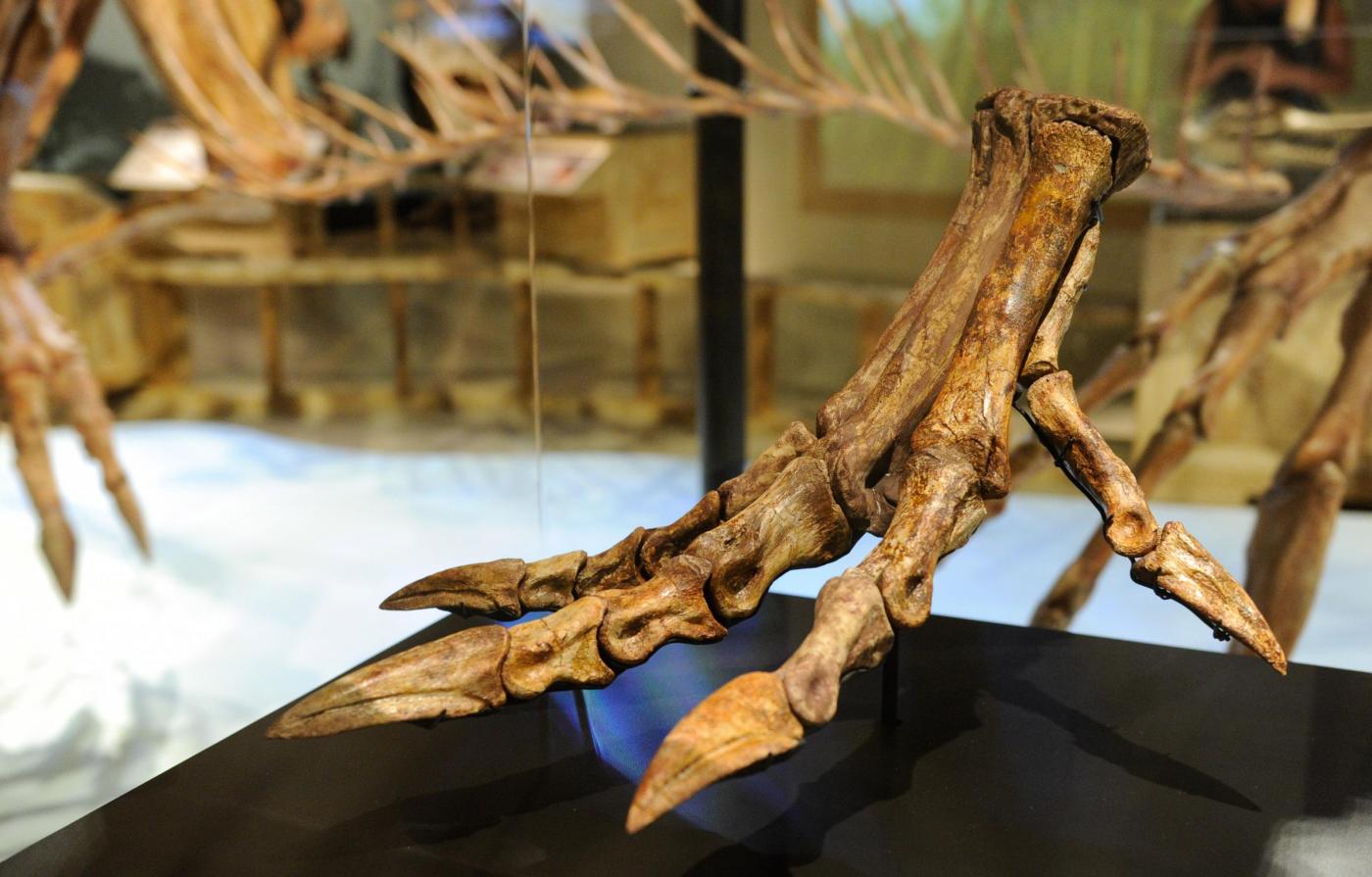 (140912) -- WASHINGTON D.C., Sept. 12, 2014 (Xinhua) -- The real bone claw of Spinosaurus aegyptiacus is showed on an exhibition "Spinosaurus: Lost Giant of the Cretaceous", featuring a life-sized skeletal model of Spinosaurus, at National Geographic Museum in Washington D.C., capital of the United States, Sep 11, 2014. Scientists on Thursday unveiled what appears to be the first truly semiaquatic dinosaur, saying the monster may have spent much of its life in Africa's ancient "river of giants", feeding on giant sharks, sawfish and lungfish and other aquatic prey. (Xinhua/Bao Dandan)
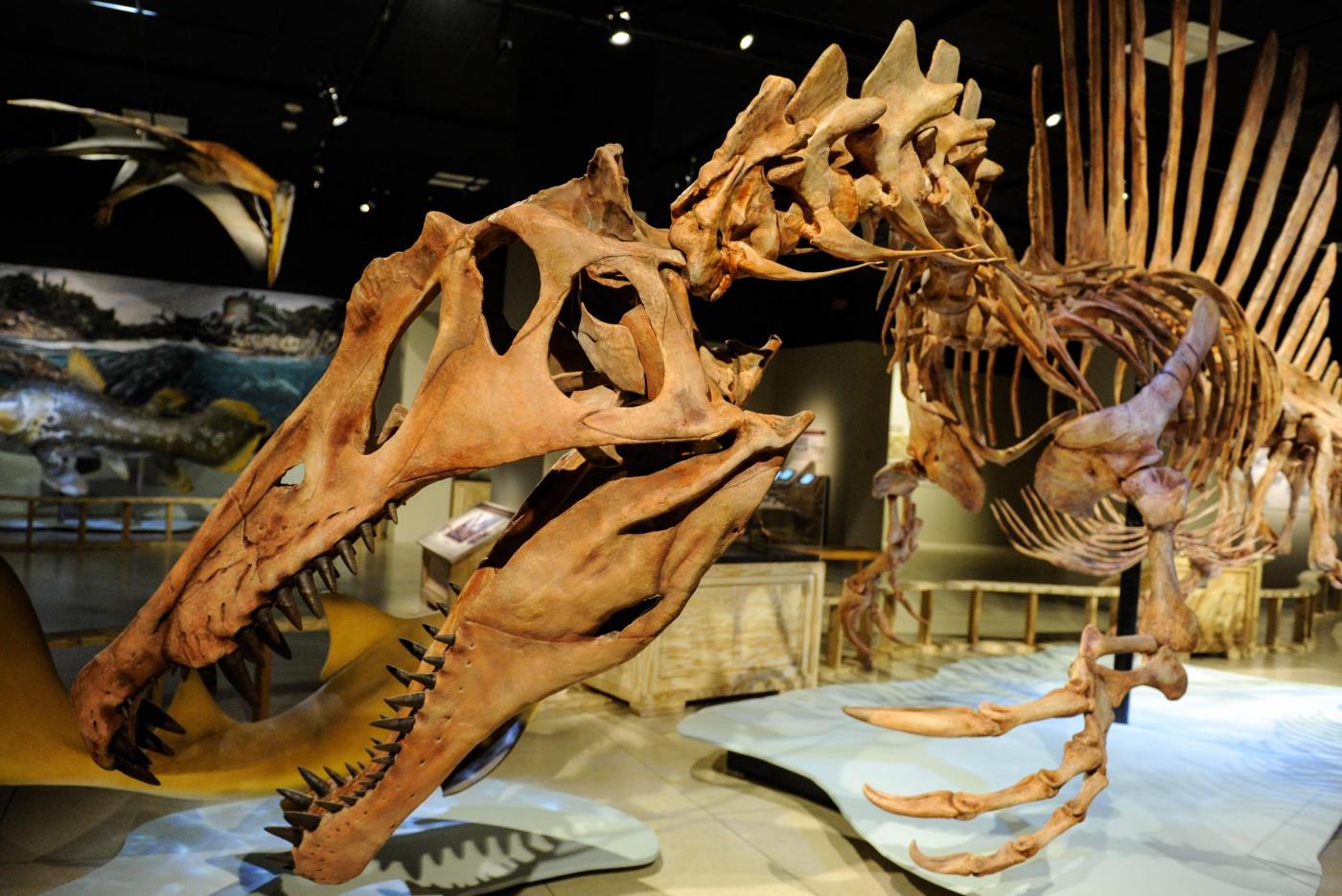 (140912) -- WASHINGTON D.C., Sept. 12, 2014 (Xinhua) -- An exhibition "Spinosaurus: Lost Giant of the Cretaceous", featuring a life-sized skeletal model of Spinosaurus, is unveiled at National Geographic Museum in Washington D.C., capital of the United States, Sept. 11, 2014. Scientists on Thursday unveiled what appears to be the first truly semiaquatic dinosaur, saying the monster may have spent much of its life in Africa's ancient "river of giants", feeding on giant sharks, sawfish and lungfish and other aquatic prey. (Xinhua/Bao Dandan)
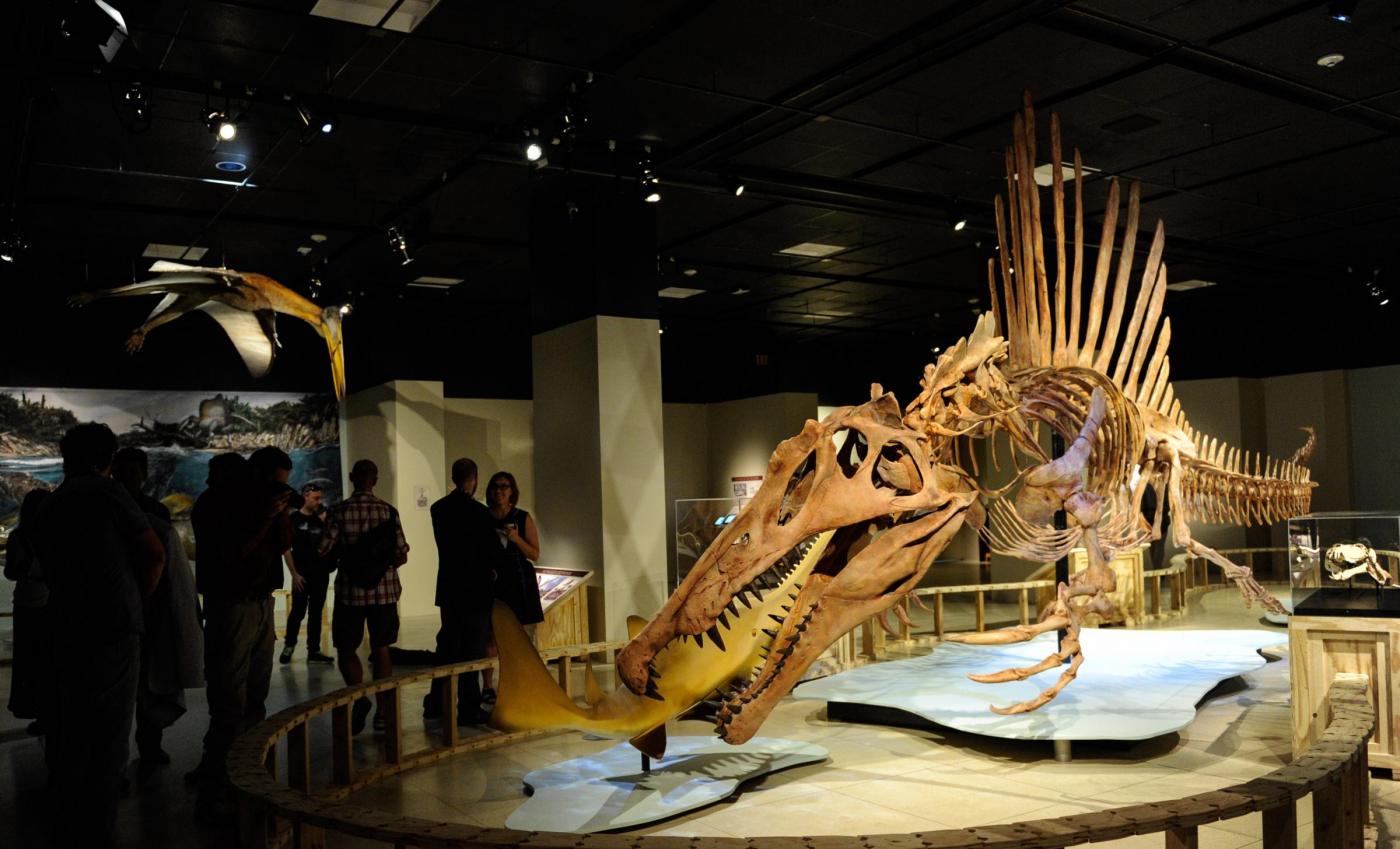 (140912) -- WASHINGTON D.C., Sept. 12, 2014 (Xinhua) -- An exhibition "Spinosaurus: Lost Giant of the Cretaceous", featuring a life-sized skeletal model of Spinosaurus, is unveiled at National Geographic Museum in Washington D.C., capital of the United States, Sept. 11, 2014. Scientists on Thursday unveiled what appears to be the first truly semiaquatic dinosaur, saying the monster may have spent much of its life in Africa's ancient "river of giants", feeding on giant sharks, sawfish and lungfish and other aquatic prey. (Xinhua/Bao Dandan)