RAWALPINDI (PAKISTAN) – Una scimmia ammaestrata vestita con abito “da lavoro” e tenuta al guinzaglio, si esibisce in pubblico a Rawalpindi in Pakistan.
Nel poverissimo paese asiatico, ammaestrare le scimmie è una fonte importante di reddito . Le scimmie vengono generalmente catturate quando sono ancora piccole. L’animale permette di raccogliere tra le 20mila e le 30mila rupie al mese (cifra che oscilla tra i 190 dollari e i 285 dollari).
L’Ap pubblica alcune foto di “ritratti” di scimmie ammaestrate. Le immagini pongono un interrogativo: si tratta di una fonte di reddito o di un abuso sugli animali?
In this Tuesday, Feb. 11, 2014, photo, a trained monkey, that makes a living for her Pakistani owner by performing to a crowd in public and private places, sits held by a leash, in Rawalpindi, Pakistan. For Pakistanis who raise and train the monkeys they are an important source of income in an impoverished country, and they form a strong bond with the animals. The monkeys are usually captured in the wild when they are babies and then trained. A trained monkey can fetch 20,000 to 30,000 rupees ($190 to $285). (AP Photo/Muhammed Muheisen) In this Wednesday, Feb. 12, 2014, photo, a trained monkey, that makes a living for his Pakistani owner by performing to a crowd in public and private places, sits held by a leash, in Rawalpindi, Pakistan. For Pakistanis who raise and train the monkeys they are an important source of income in an impoverished country, and they form a strong bond with the animals. The monkeys are usually captured in the wild when they are babies and then trained. A trained monkey can fetch 20,000 to 30,000 rupees ($190 to $285). (AP Photo/Muhammed Muheisen) In this Wednesday, Feb. 12, 2014, photo, a trained monkey, that makes a living for her Pakistani owner by performing to a crowd in public and private places, sits held by a leash, in Rawalpindi, Pakistan. For Pakistanis who raise and train the monkeys they are an important source of income in an impoverished country, and they form a strong bond with the animals. The monkeys are usually captured in the wild when they are babies and then trained. A trained monkey can fetch 20,000 to 30,000 rupees ($190 to $285). (AP Photo/Muhammed Muheisen) In this Monday, Feb. 17, 2014, photo, a trained monkey, that makes a living for her Pakistani owner by performing to a crowd in public and private places, sits held by a leash, in a village outside Rawalpindi, Pakistan. For Pakistanis who raise and train the monkeys they are an important source of income in an impoverished country, and they form a strong bond with the animals. The monkeys are usually captured in the wild when they are babies and then trained. A trained monkey can fetch 20,000 to 30,000 rupees ($190 to $285). (AP Photo/Muhammed Muheisen) In this Monday, Feb. 17, 2014, photo, a trained monkey, that makes a living for his Pakistani owner by performing to a crowd in public and private places, sits held by a leash, in a village outside Rawalpindi, Pakistan. For Pakistanis who raise and train the monkeys they are an important source of income in an impoverished country, and they form a strong bond with the animals. The monkeys are usually captured in the wild when they are babies and then trained. A trained monkey can fetch 20,000 to 30,000 rupees ($190 to $285). (AP Photo/Muhammed Muheisen) In this Tuesday, Feb. 11, 2014, photo, a trained monkey, that makes a living for her Pakistani owner by performing to a crowd in public and private places, sits held by a leash, in Rawalpindi, Pakistan. For Pakistanis who raise and train the monkeys they are an important source of income in an impoverished country, and they form a strong bond with the animals. The monkeys are usually captured in the wild when they are babies and then trained. A trained monkey can fetch 20,000 to 30,000 rupees ($190 to $285). (AP Photo/Muhammed Muheisen) In this Monday, Feb. 17, 2014, photo, a trained monkey, that makes a living for his Pakistani owner by performing to a crowd in public and private places, sits held by a leash, in a village outside Rawalpindi, Pakistan. For Pakistanis who raise and train the monkeys they are an important source of income in an impoverished country, and they form a strong bond with the animals. The monkeys are usually captured in the wild when they are babies and then trained. A trained monkey can fetch 20,000 to 30,000 rupees ($190 to $285). (AP Photo/Muhammed Muheisen) In this Thursday, Feb. 13, 2014, photo, a trained monkey, that makes a living for her Pakistani owner by performing to a crowd in public and private places, sits held by a leash, on the outskirts of Islamabad, Pakistan.For Pakistanis who raise and train the monkeys they are an important source of income in an impoverished country, and they form a strong bond with the animals. The monkeys are usually captured in the wild when they are babies and then trained. A trained monkey can fetch 20,000 to 30,000 rupees ($190 to $285). (AP Photo/Muhammed Muheisen) In this Tuesday, Feb. 11, 2014, photo, a trained monkey, that makes a living for his Pakistani owner by performing to a crowd in public and private places, sits held by a leash, on the outskirts of Islamabad, Pakistan. For Pakistanis who raise and train the monkeys they are an important source of income in an impoverished country, and they form a strong bond with the animals. The monkeys are usually captured in the wild when they are babies and then trained. A trained monkey can fetch 20,000 to 30,000 rupees ($190 to $285). (AP Photo/Muhammed Muheisen) In this Tuesday, Feb. 11, 2014, photo, a trained monkey, that makes a living for her Pakistani owner by performing to a crowd in public and private places, sits held by a leash, on the outskirts of Islamabad, Pakistan. For Pakistanis who raise and train the monkeys they are an important source of income in an impoverished country, and they form a strong bond with the animals. The monkeys are usually captured in the wild when they are babies and then trained. A trained monkey can fetch 20,000 to 30,000 rupees ($190 to $285). (AP Photo/Muhammed Muheisen)

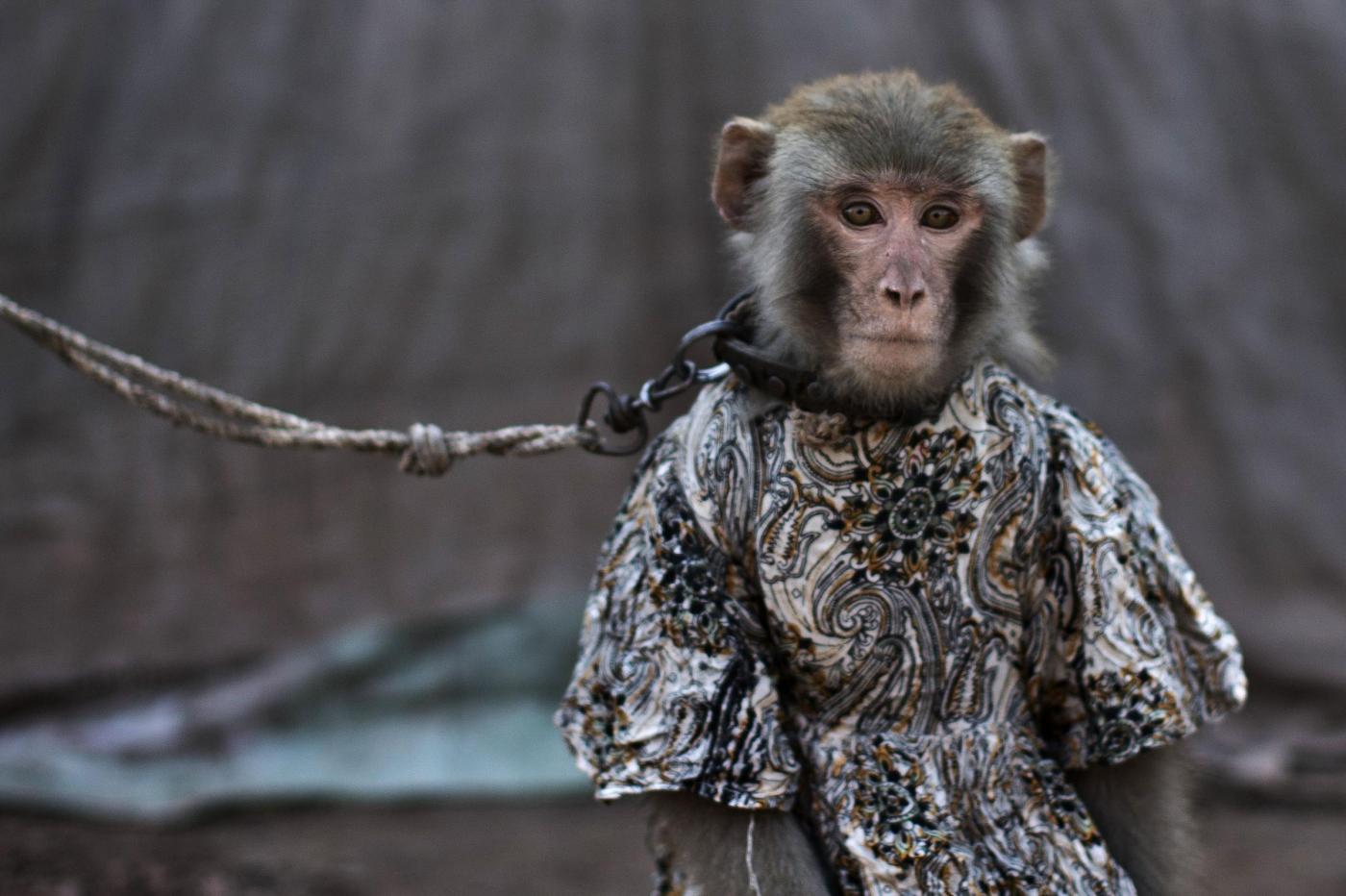
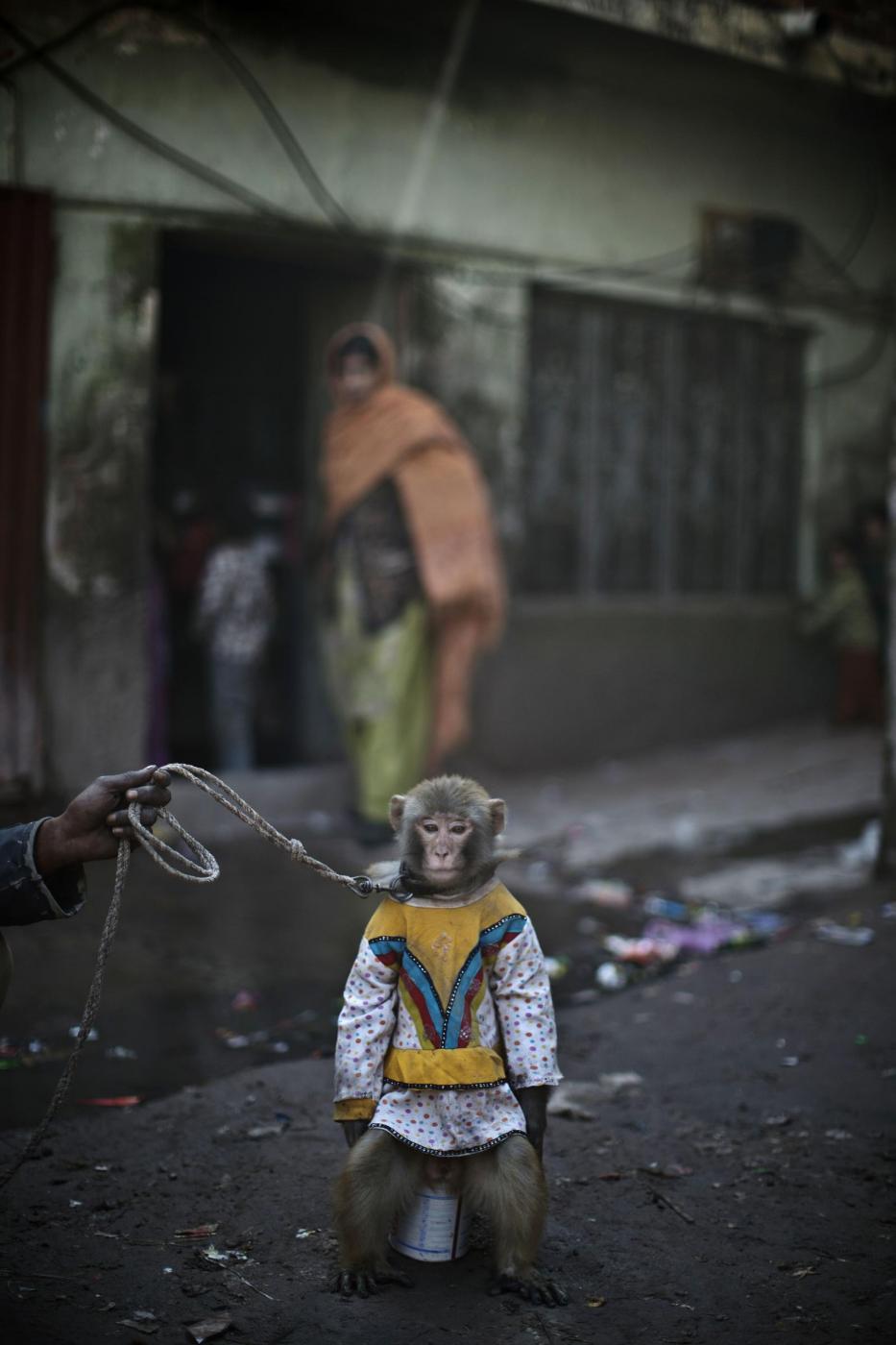 In this Wednesday, Feb. 12, 2014, photo, a trained monkey, that makes a living for his Pakistani owner by performing to a crowd in public and private places, sits held by a leash, in Rawalpindi, Pakistan. For Pakistanis who raise and train the monkeys they are an important source of income in an impoverished country, and they form a strong bond with the animals. The monkeys are usually captured in the wild when they are babies and then trained. A trained monkey can fetch 20,000 to 30,000 rupees ($190 to $285). (AP Photo/Muhammed Muheisen)
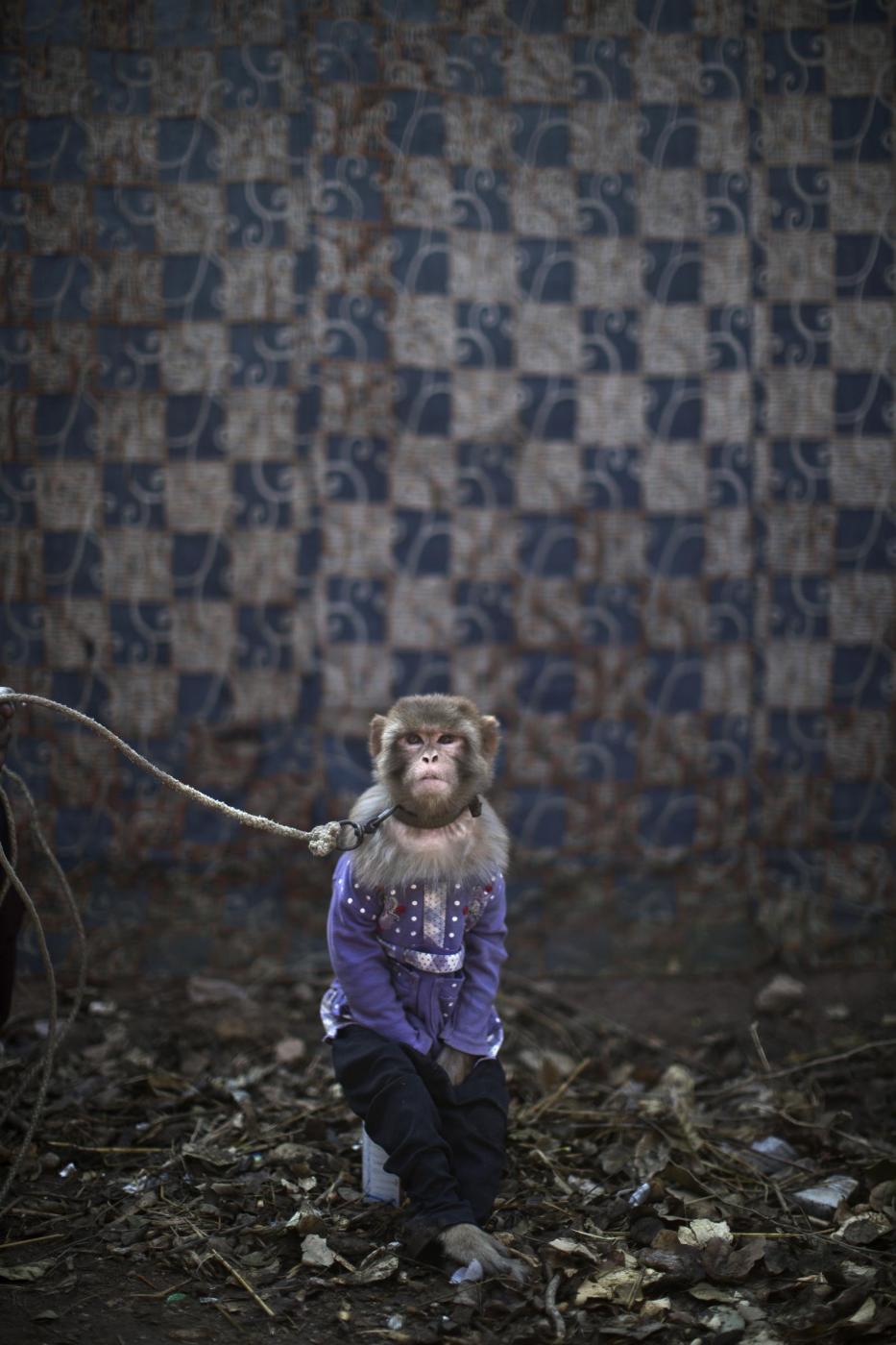 In this Wednesday, Feb. 12, 2014, photo, a trained monkey, that makes a living for her Pakistani owner by performing to a crowd in public and private places, sits held by a leash, in Rawalpindi, Pakistan. For Pakistanis who raise and train the monkeys they are an important source of income in an impoverished country, and they form a strong bond with the animals. The monkeys are usually captured in the wild when they are babies and then trained. A trained monkey can fetch 20,000 to 30,000 rupees ($190 to $285). (AP Photo/Muhammed Muheisen)
 In this Monday, Feb. 17, 2014, photo, a trained monkey, that makes a living for her Pakistani owner by performing to a crowd in public and private places, sits held by a leash, in a village outside Rawalpindi, Pakistan. For Pakistanis who raise and train the monkeys they are an important source of income in an impoverished country, and they form a strong bond with the animals. The monkeys are usually captured in the wild when they are babies and then trained. A trained monkey can fetch 20,000 to 30,000 rupees ($190 to $285). (AP Photo/Muhammed Muheisen)
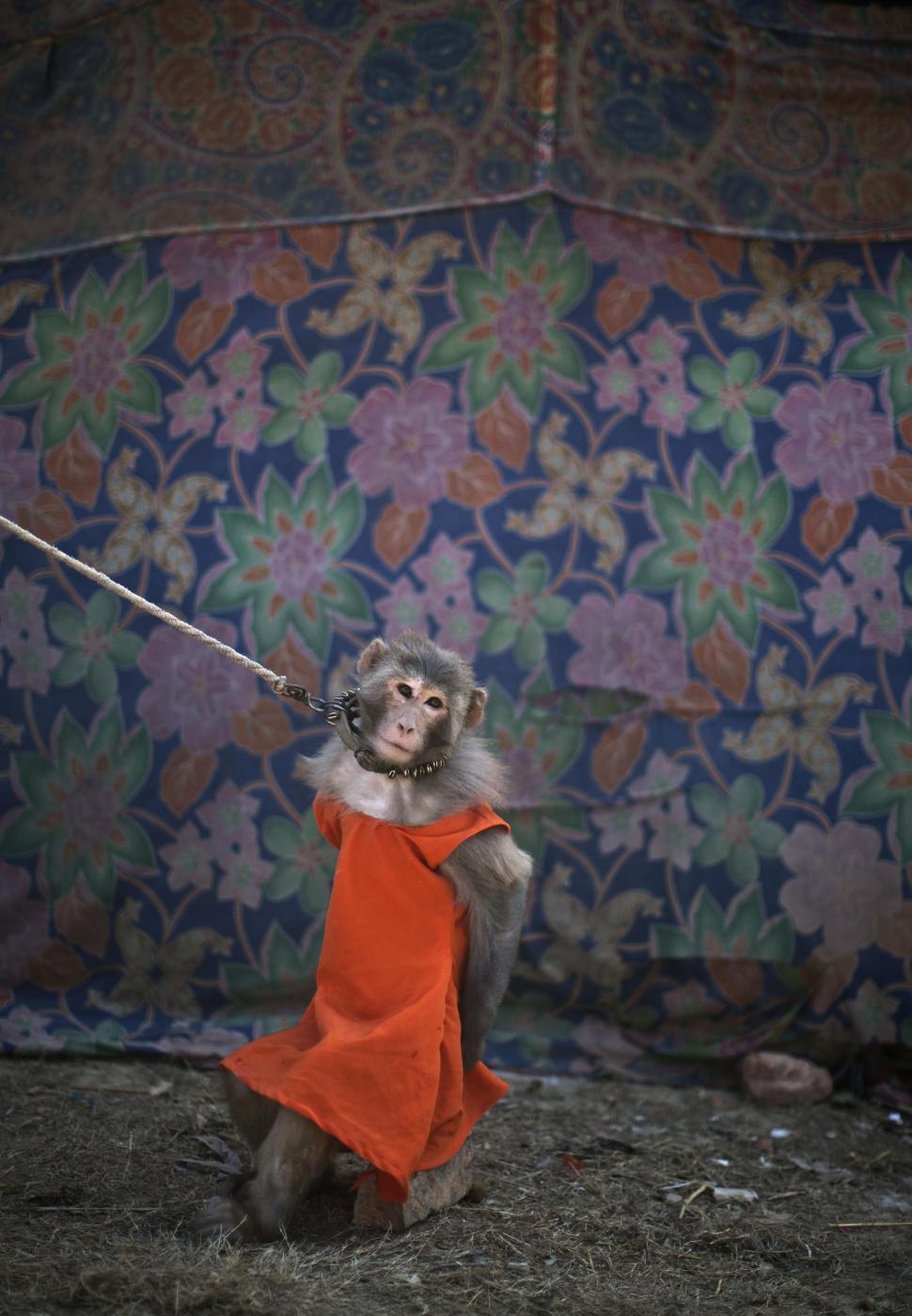 In this Monday, Feb. 17, 2014, photo, a trained monkey, that makes a living for his Pakistani owner by performing to a crowd in public and private places, sits held by a leash, in a village outside Rawalpindi, Pakistan. For Pakistanis who raise and train the monkeys they are an important source of income in an impoverished country, and they form a strong bond with the animals. The monkeys are usually captured in the wild when they are babies and then trained. A trained monkey can fetch 20,000 to 30,000 rupees ($190 to $285). (AP Photo/Muhammed Muheisen)
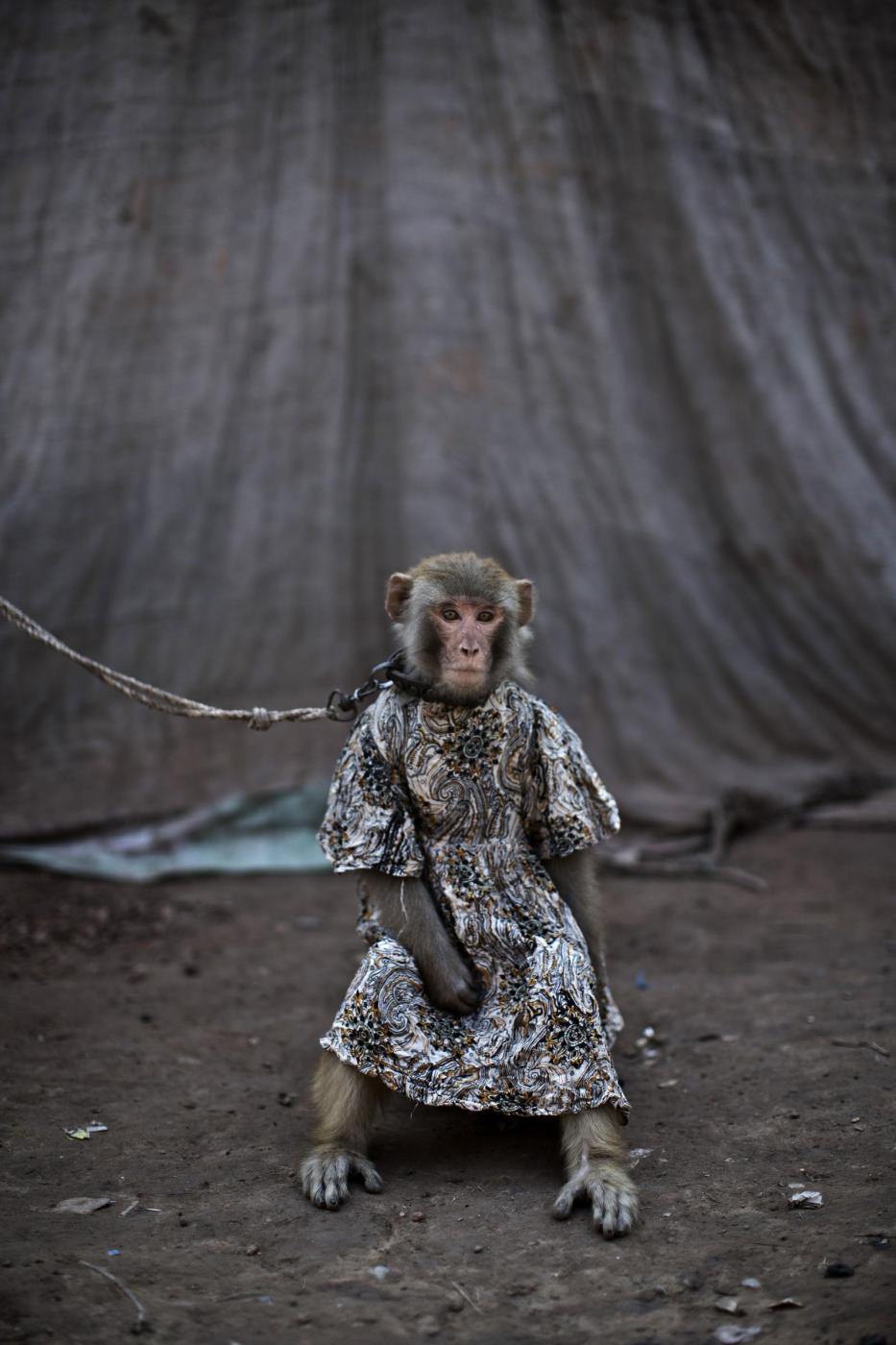 In this Tuesday, Feb. 11, 2014, photo, a trained monkey, that makes a living for her Pakistani owner by performing to a crowd in public and private places, sits held by a leash, in Rawalpindi, Pakistan. For Pakistanis who raise and train the monkeys they are an important source of income in an impoverished country, and they form a strong bond with the animals. The monkeys are usually captured in the wild when they are babies and then trained. A trained monkey can fetch 20,000 to 30,000 rupees ($190 to $285). (AP Photo/Muhammed Muheisen)
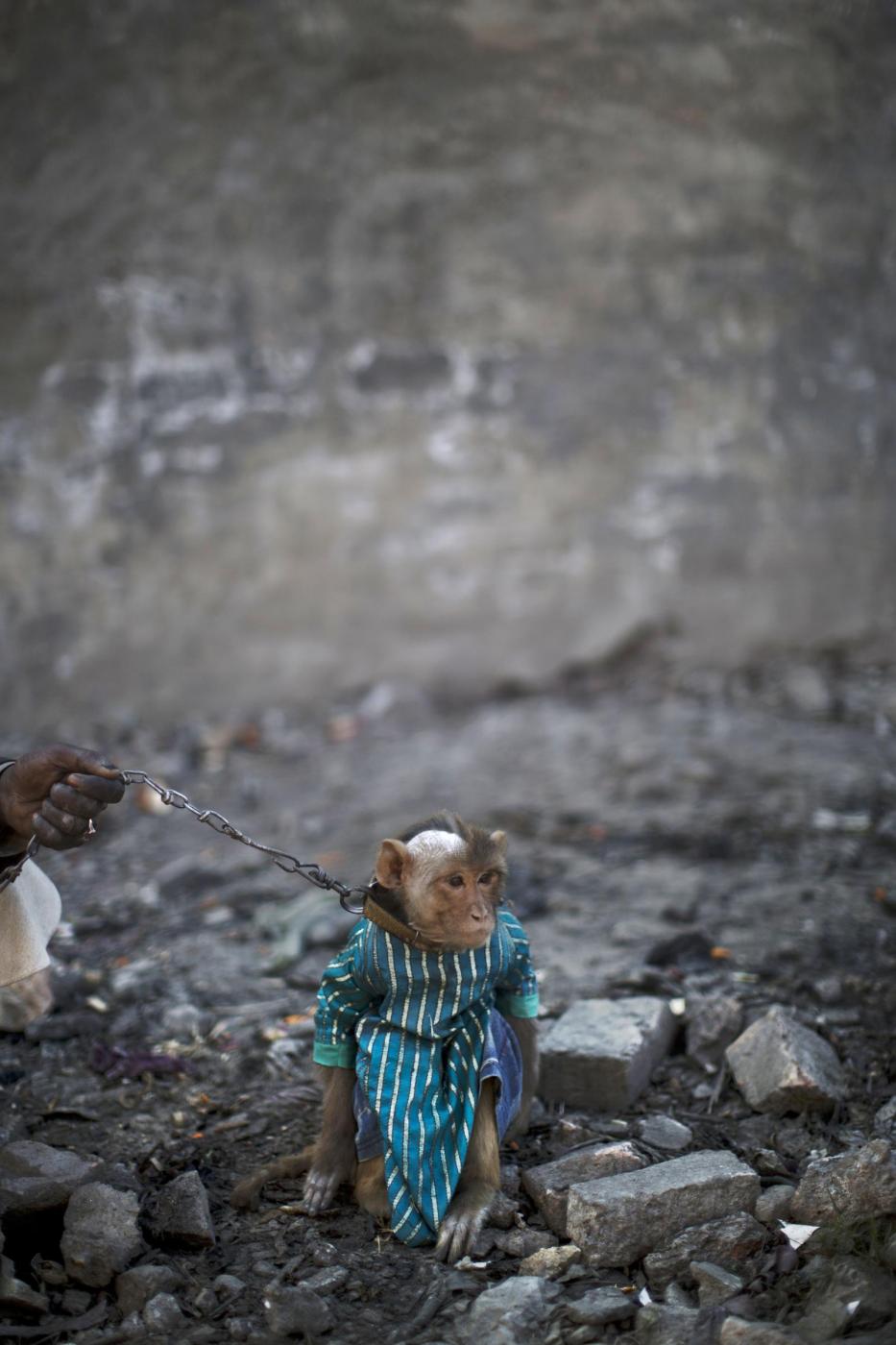 In this Monday, Feb. 17, 2014, photo, a trained monkey, that makes a living for his Pakistani owner by performing to a crowd in public and private places, sits held by a leash, in a village outside Rawalpindi, Pakistan. For Pakistanis who raise and train the monkeys they are an important source of income in an impoverished country, and they form a strong bond with the animals. The monkeys are usually captured in the wild when they are babies and then trained. A trained monkey can fetch 20,000 to 30,000 rupees ($190 to $285). (AP Photo/Muhammed Muheisen)
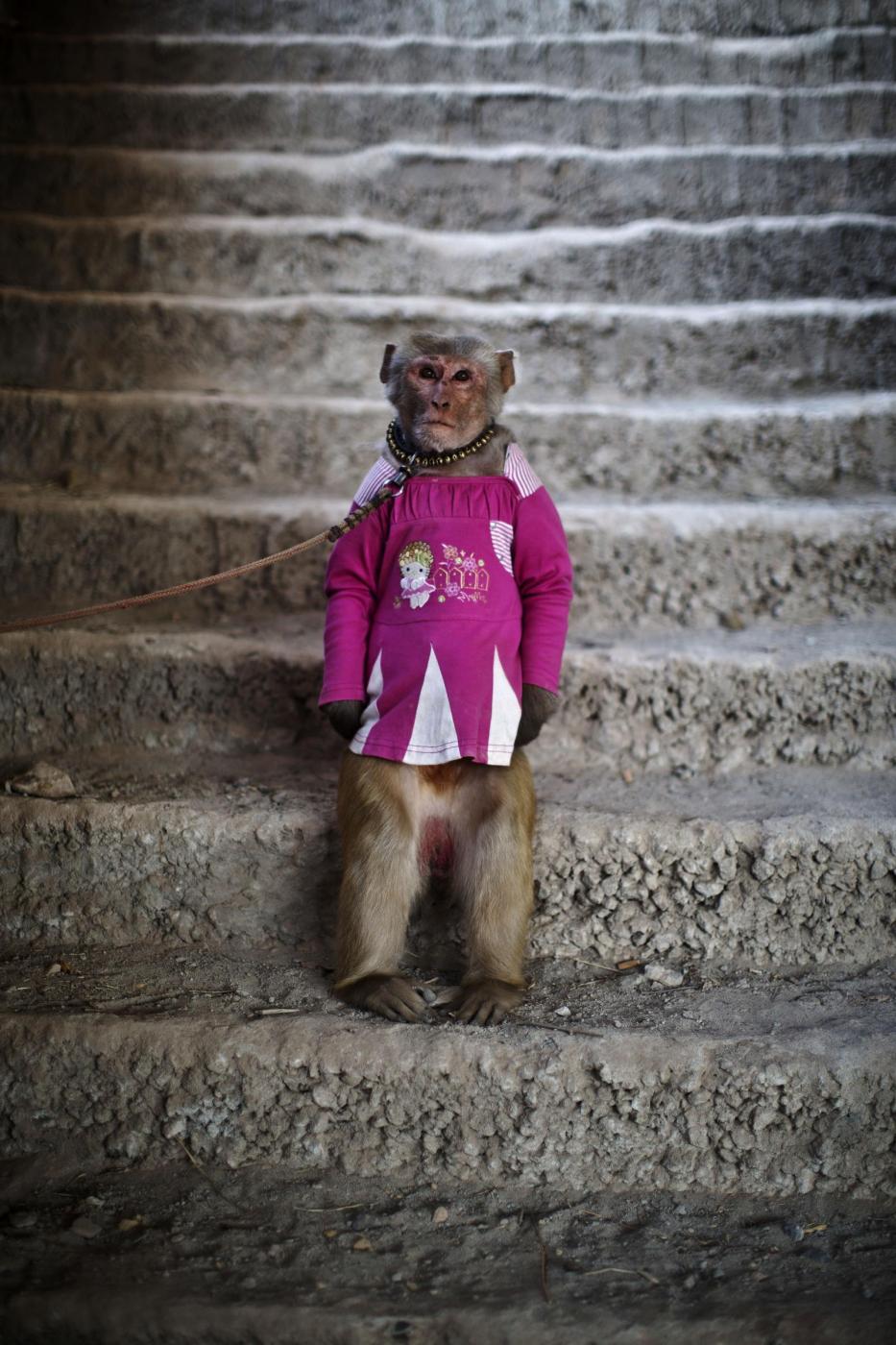 In this Thursday, Feb. 13, 2014, photo, a trained monkey, that makes a living for her Pakistani owner by performing to a crowd in public and private places, sits held by a leash, on the outskirts of Islamabad, Pakistan.For Pakistanis who raise and train the monkeys they are an important source of income in an impoverished country, and they form a strong bond with the animals. The monkeys are usually captured in the wild when they are babies and then trained. A trained monkey can fetch 20,000 to 30,000 rupees ($190 to $285). (AP Photo/Muhammed Muheisen)
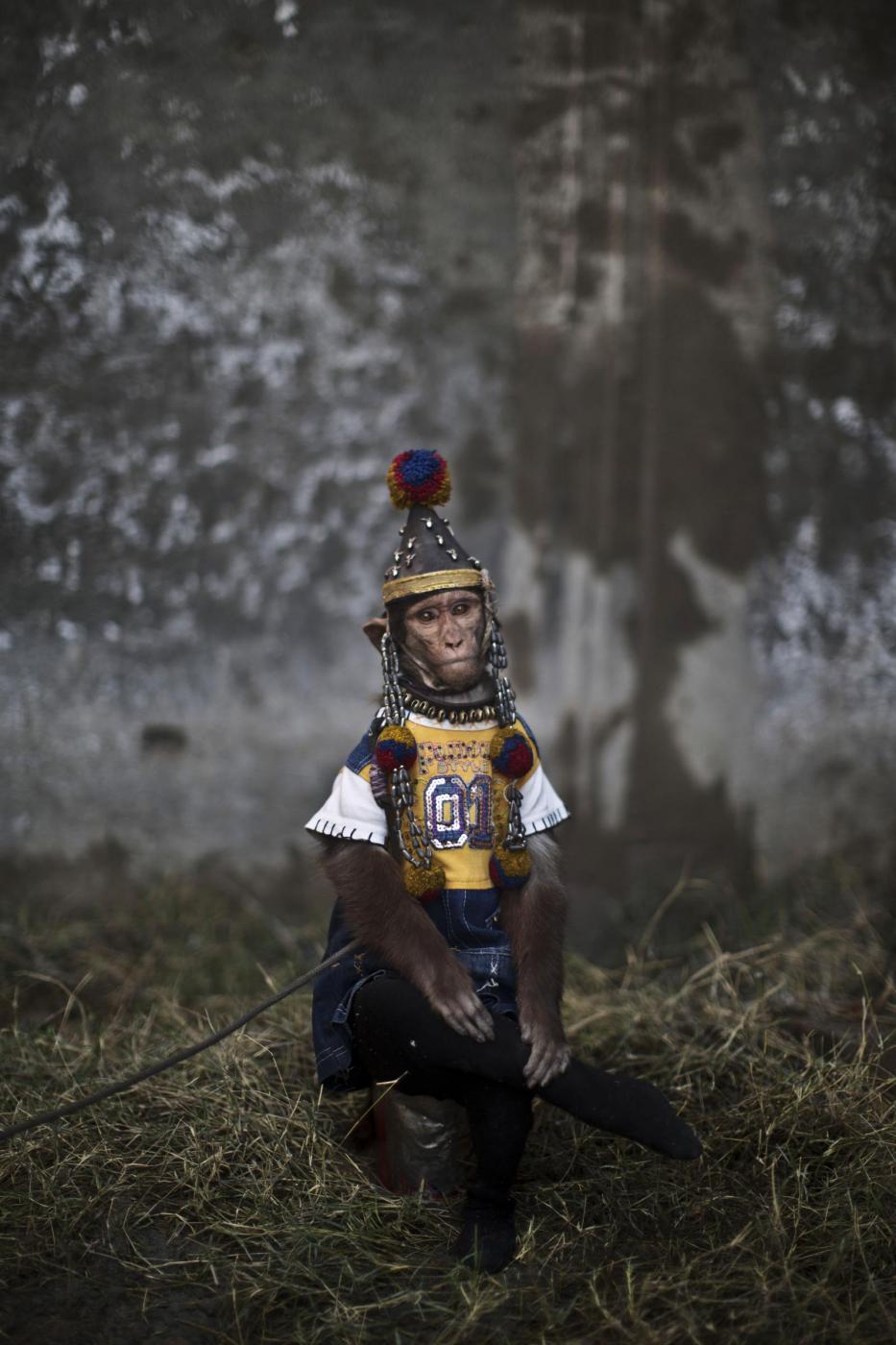 In this Tuesday, Feb. 11, 2014, photo, a trained monkey, that makes a living for his Pakistani owner by performing to a crowd in public and private places, sits held by a leash, on the outskirts of Islamabad, Pakistan. For Pakistanis who raise and train the monkeys they are an important source of income in an impoverished country, and they form a strong bond with the animals. The monkeys are usually captured in the wild when they are babies and then trained. A trained monkey can fetch 20,000 to 30,000 rupees ($190 to $285). (AP Photo/Muhammed Muheisen)
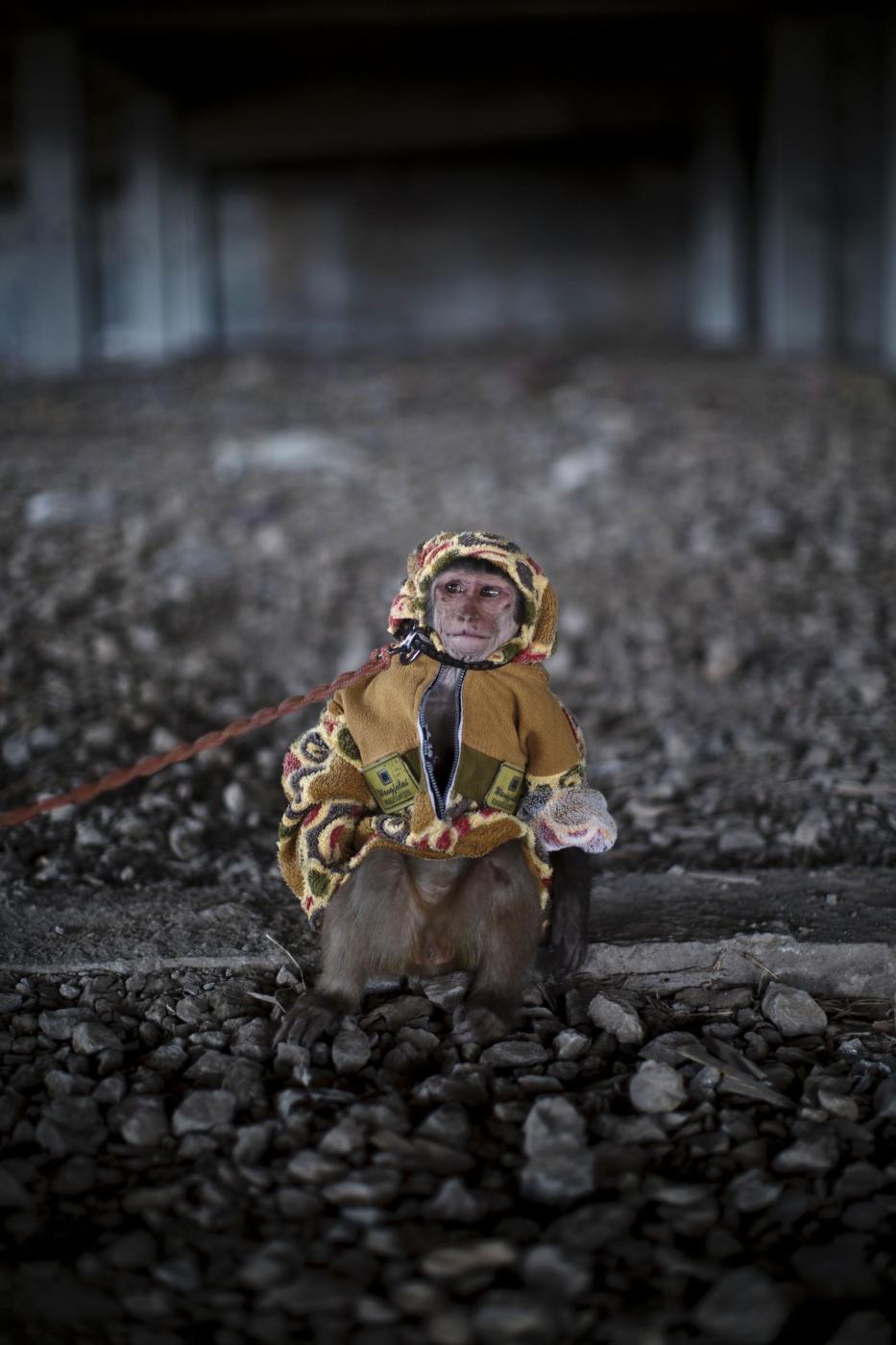 In this Tuesday, Feb. 11, 2014, photo, a trained monkey, that makes a living for her Pakistani owner by performing to a crowd in public and private places, sits held by a leash, on the outskirts of Islamabad, Pakistan. For Pakistanis who raise and train the monkeys they are an important source of income in an impoverished country, and they form a strong bond with the animals. The monkeys are usually captured in the wild when they are babies and then trained. A trained monkey can fetch 20,000 to 30,000 rupees ($190 to $285). (AP Photo/Muhammed Muheisen)