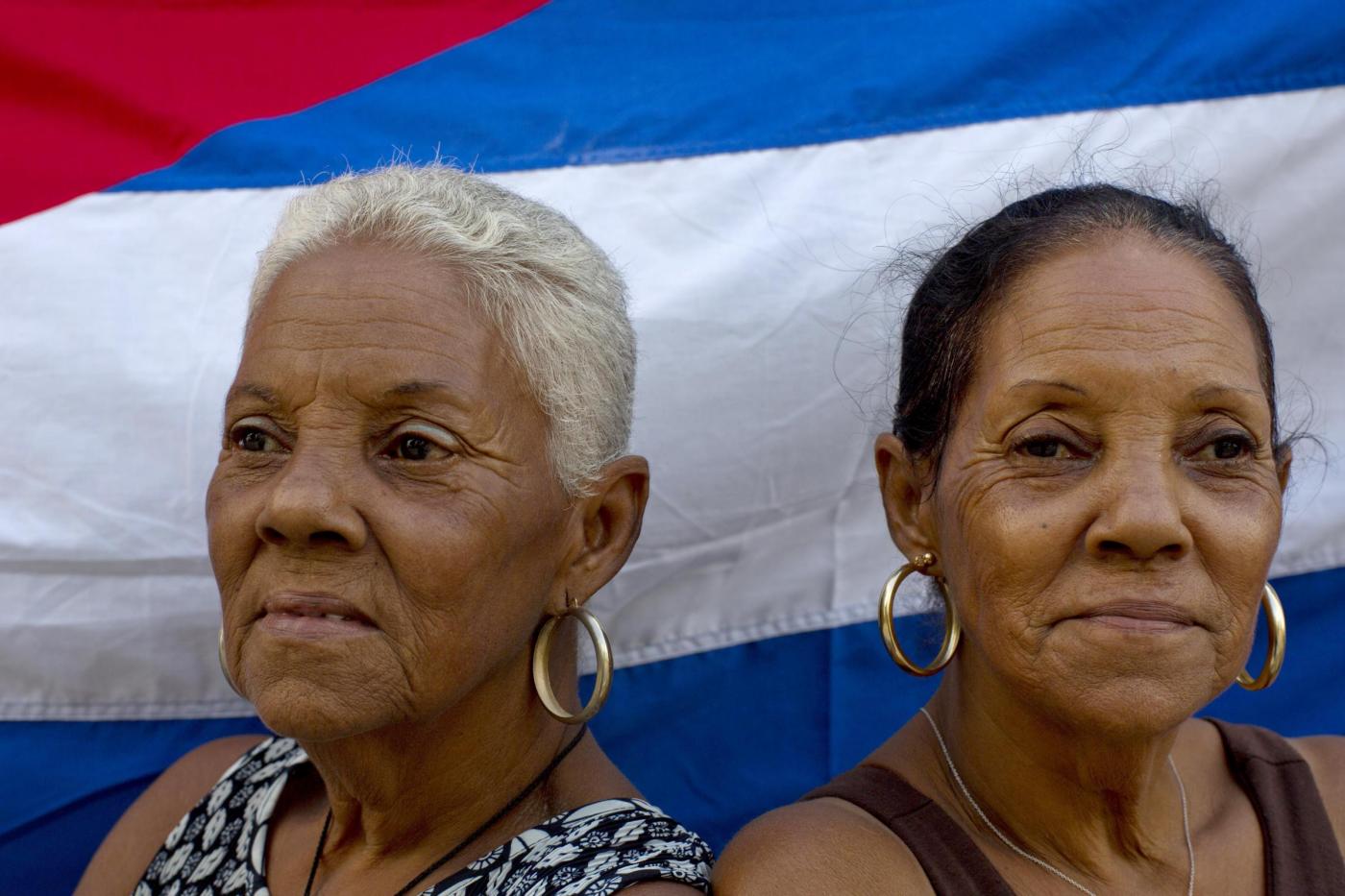
L’AVANA (CUBA) – Un quartiere abitato quasi interamente da coppie di gemelli. Accade a l’Avana, capitale cubana, nel quartiere Buenavista: qui si raccolgono 12 coppie di gemelli omo ed eterozigoti, con un’età che va dagli zero anni agli over 70.
In questa zona nasce una coppia di gemelli ogni venti, una percentuale enormemente maggiore rispetto alla media nazionale di una coppia ogni 80 persone. Molte le ipotesi su questo fenomeno che, assicurano orgogliosi i genitori, non è causato da nessun tipo di trattamento per la fertilità o affini. Alcuni ipotizzano che ci sia qualche sostanza particolare nell’acqua, altri imputano le nascite gemellari a un albero sacro, il Siguaraya, che la Santeria cubana associa al potente spirito Orisha.
(Foto LaPresse)
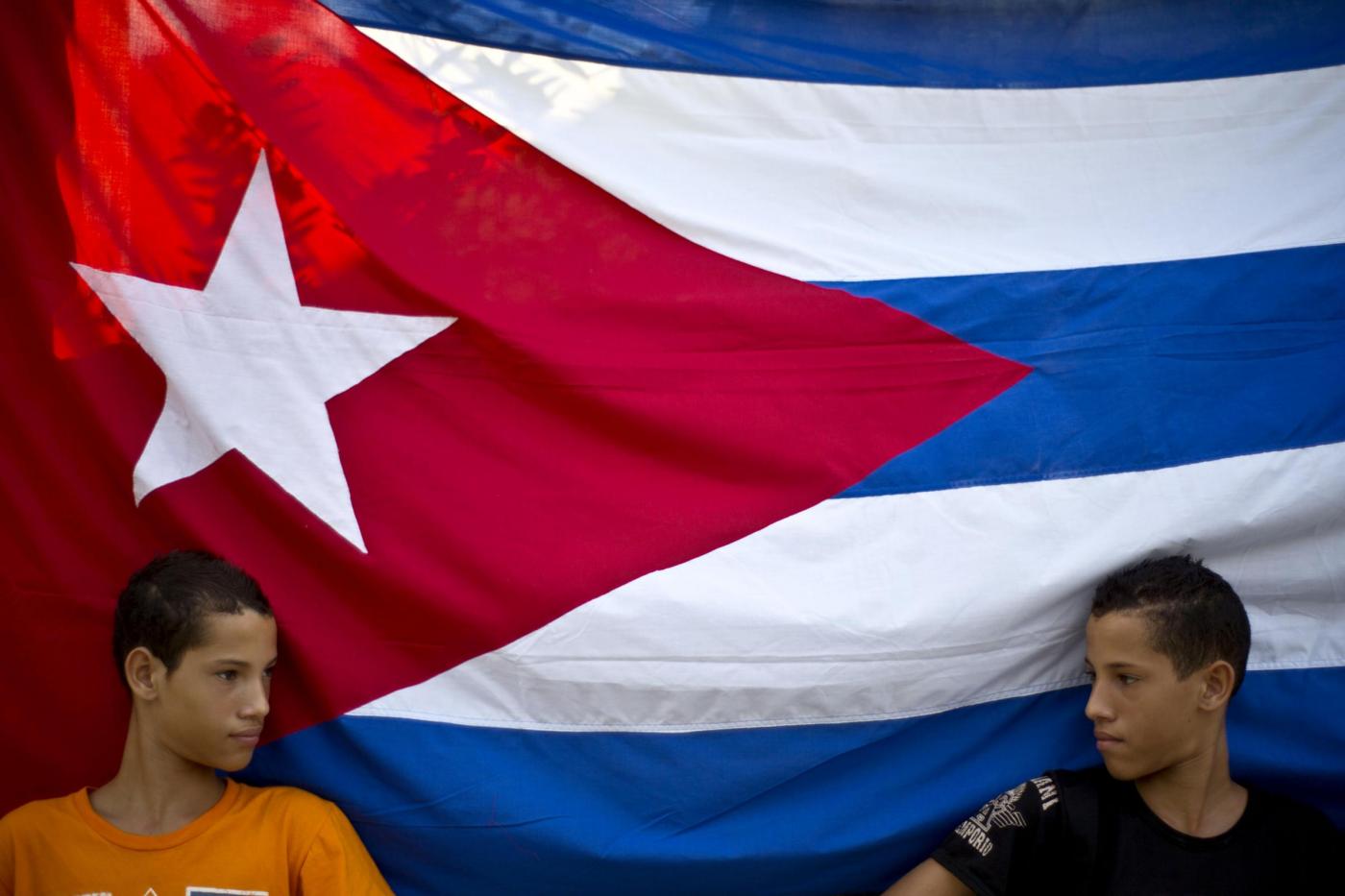 In this Sept. 29, 2013 photo, 15-year-old twins Damian and Cosme Depersi pose for portraits in front a Cuban flag along their street in Havana, Cuba. The Depersi brothers are just one set of twins, out of 12 sets, living along two consecutive blocks in western Havana. (AP Photo/Ramon Espinosa)
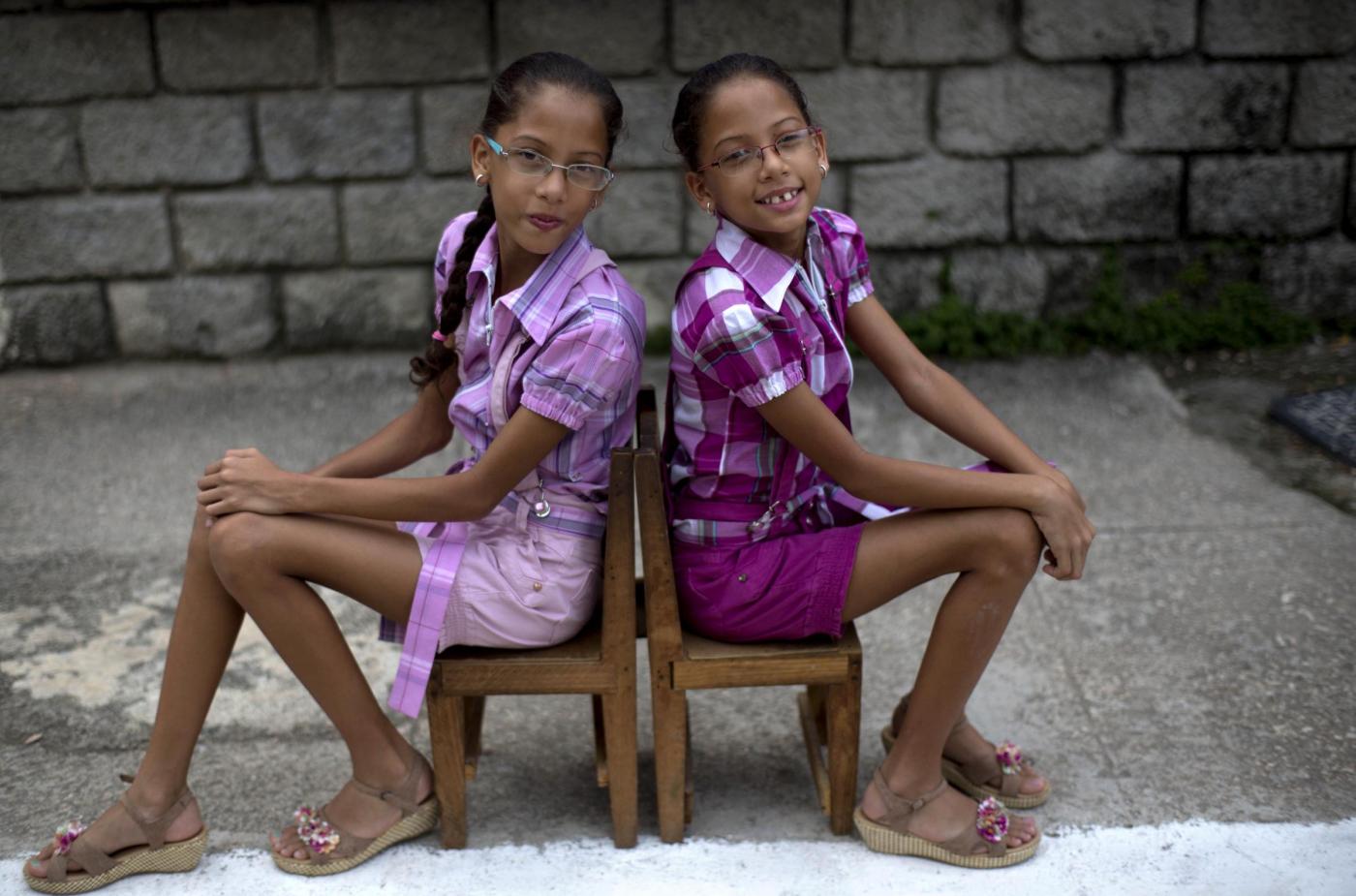 In this Sept. 29, 2013 photo, nine-year-old twin sisters Camila, left, and Carla Rodriguez pose for a portrait along their street in Havana, Cuba. 12 sets of twins live along two consecutive blocks in western Havana, ranging in age from newborns to senior citizens. "We love living on this block because we have twin friends," said Carla. (AP Photo/Ramon Espinosa)
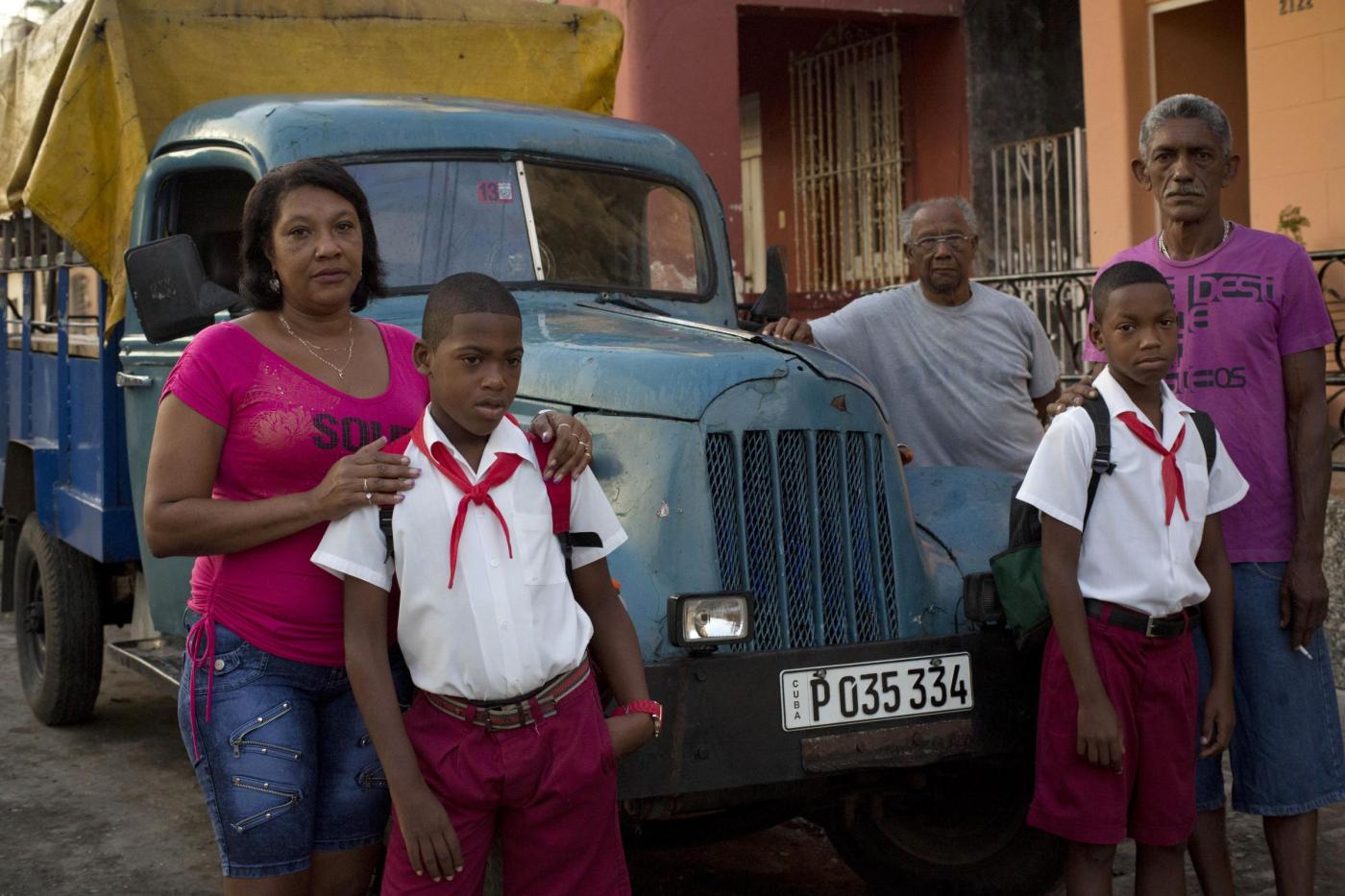 In this Sept. 23, 2013 photo, 11-year-old twin brothers Arian and Adrian Cueto pose for portraits in their school uniforms alongside their parents and grandfather as they gather around their family's truck in Havana, Cuba. The Cueto twins are one of 12 sets of twins living along two consecutive blocks in western Havana, ranging in age from newborns to senior citizens. (AP Photo/Ramon Espinosa)
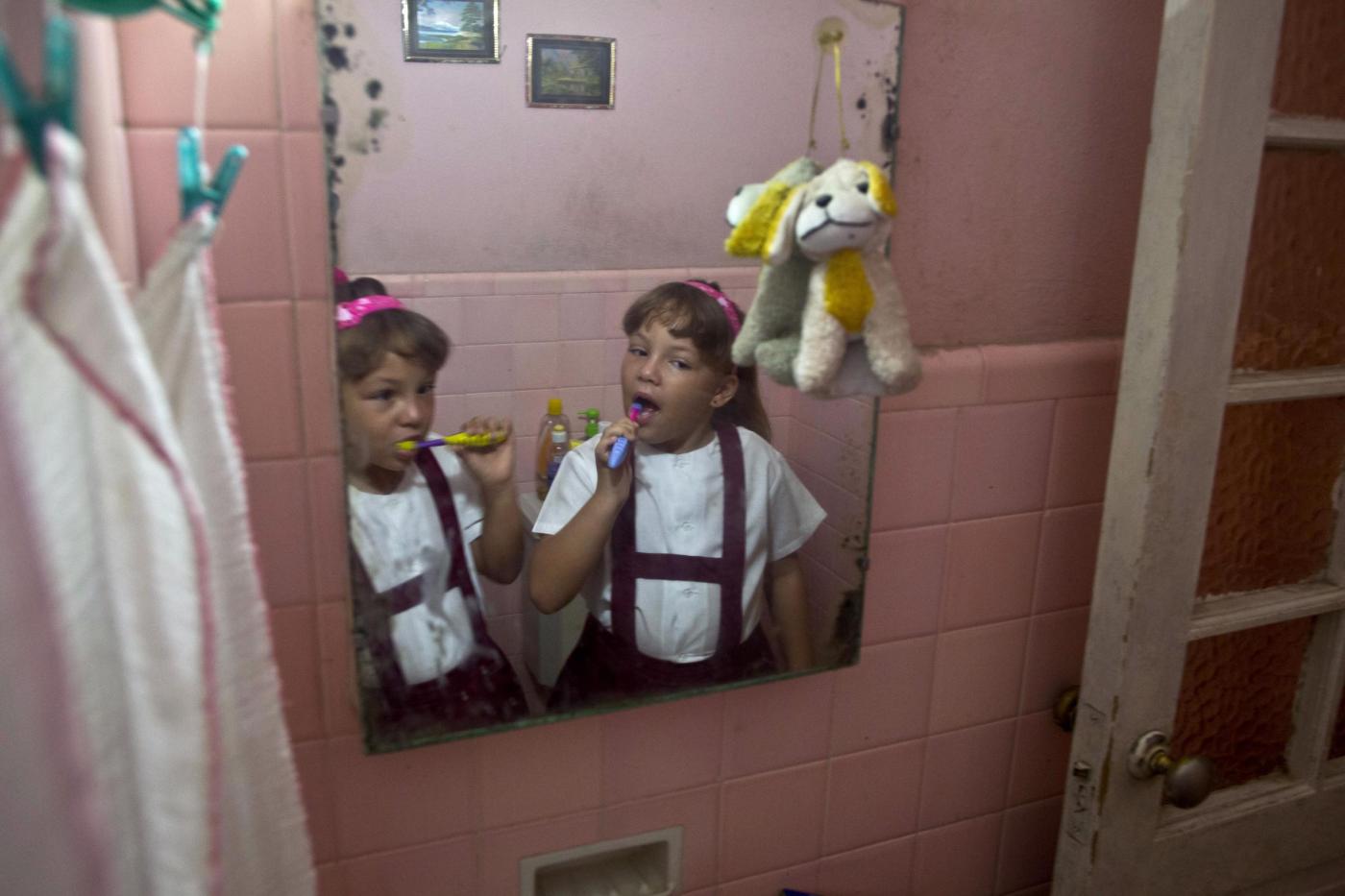 In this Sept. 23, 2013 photo, six-year-old twin sisters Asley and Aslen Velazquez prepare for school in Havana, Cuba. Their mother Tamara Velazquez said she never expected to have twins from her first pregnancy and did not take fertility treatments. "It's a lot of work. It requires a lot of patience," Velazquez said. "They are very active and dominant, although each has a different character." (AP Photo/Ramon Espinosa)
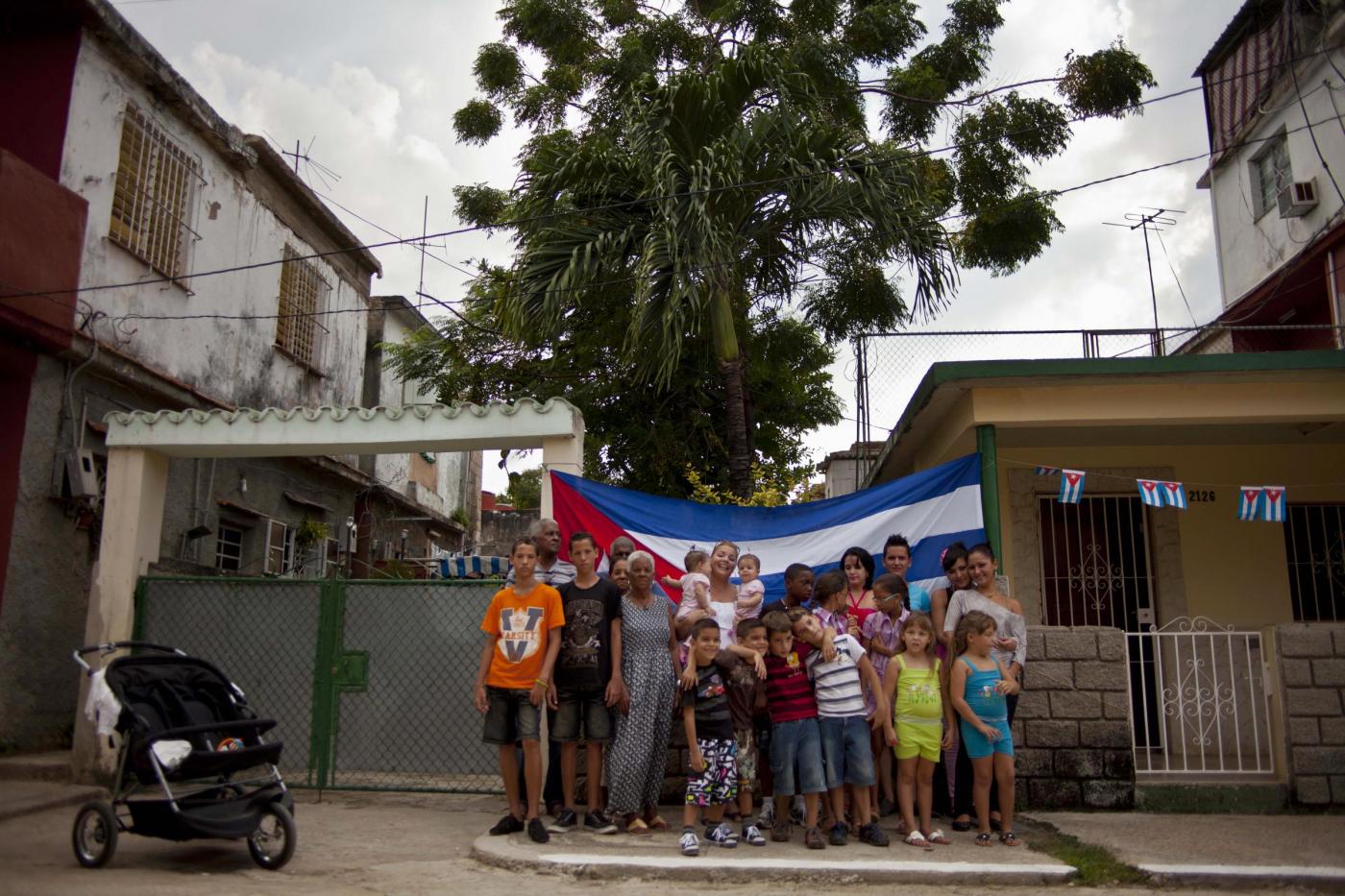 In this Sept. 29, 2013 photo, pairs of twins pose for a group portrait near a Siguaraya tree along their street in Havana, Cuba. While there's been no scholarly study of the twins on 68-A Street, some look to faith for an explanation. "Many say it's the Siguaraya tree, which people ask for things and is in one of the homes," said Fe Fernandez, one of the twins. "The people believe in it strongly." (AP Photo/Ramon Espinosa)
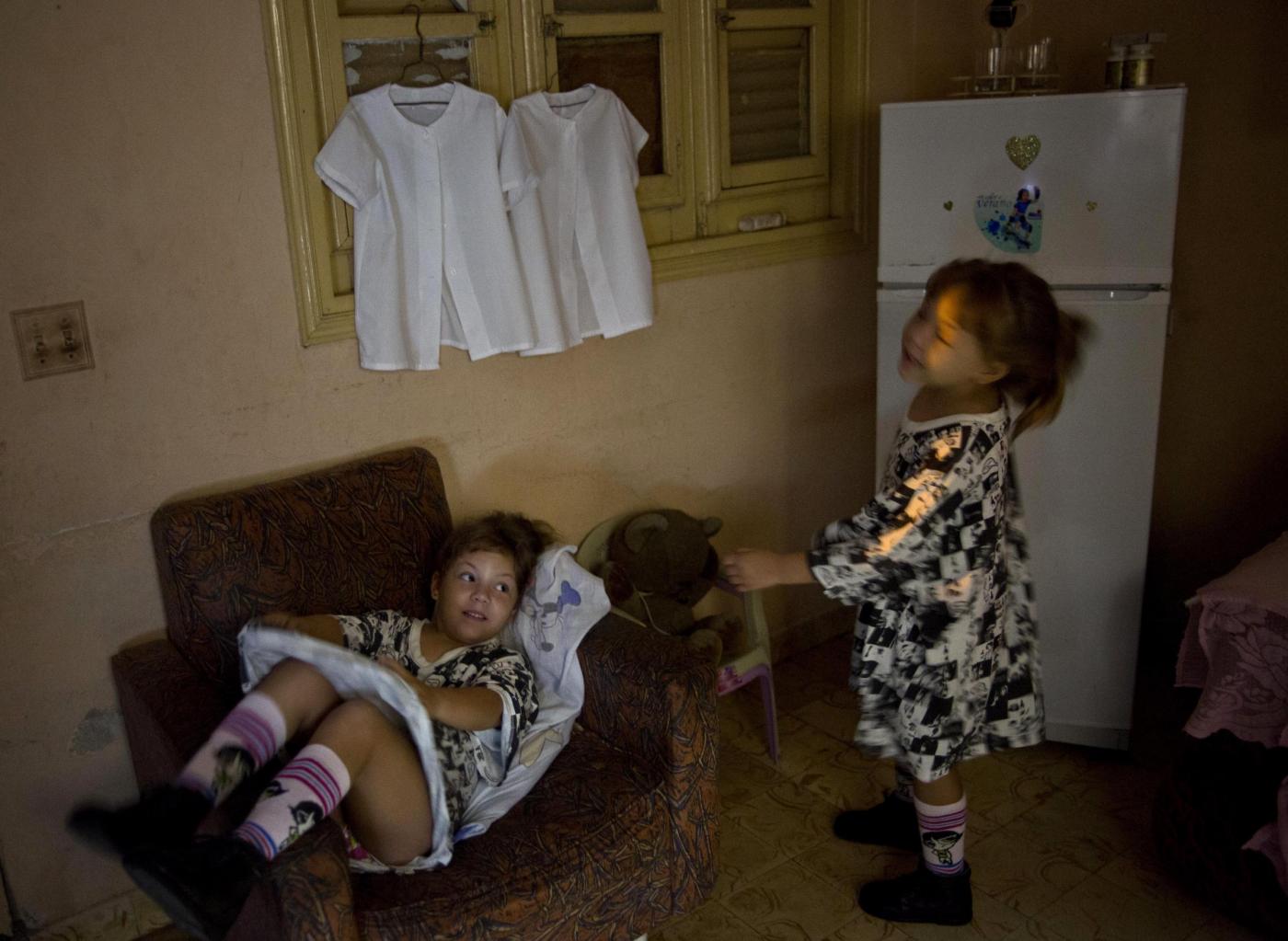 In this Sept. 23, 2013 photo, six-year-old twins Asley and Aslen Velazquez get ready for school in Havana, Cuba. Their mother Tamara said she never expected to have twins from her first pregnancy and did not take fertility treatments. "It's a lot of work. It requires a lot of patience," Velazquez said. "They are very active and dominant, although each has a different character." (AP Photo/Ramon Espinosa)
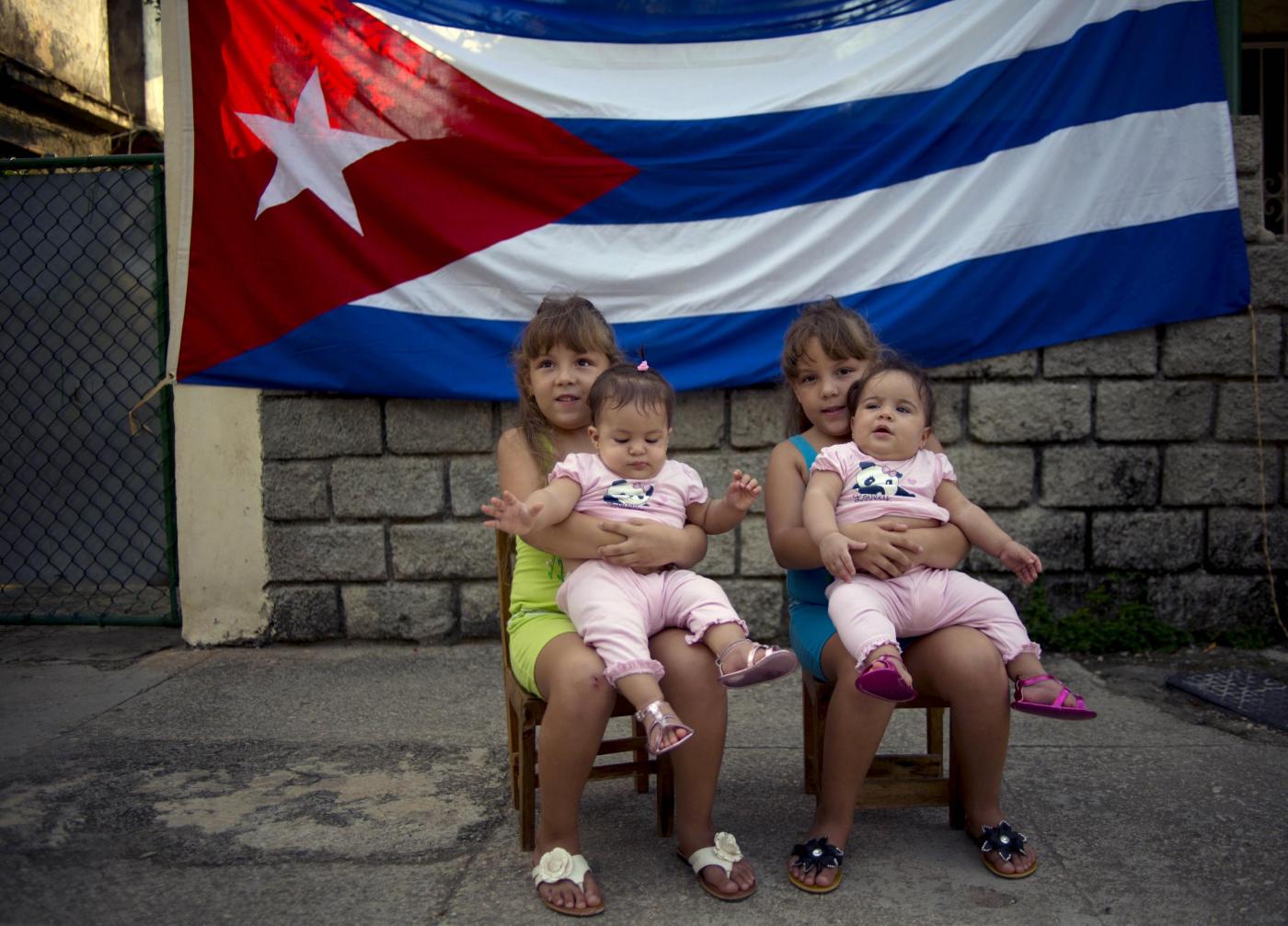 In this Sept. 29, 2013 photo, six-year-old twins Asley and Aslen Velazquez hold eight-month-old twins Tiffani and Stessany Valles as they pose for portraits in front a Cuban flag on their street in Havana, Cuba. While there's been no scholarly study of the 12 sets of twins on 68-A Street, they nonetheless consider themselves part of a special community. (AP Photo/Ramon Espinosa)