BRASILIA – Ha trasportato gli hippy negli anni ’60, poi i surfisti in cerca di onde, fino a diventare un simbolo di ribellione. E’ ora di dargli l’addio definitivo, perché anche il Brasile dal 31 dicembre fermerà la produzione del van Type 2 della Volkswagen .
Era l’unico Paese al mondo in cui veniva ancora prodotto. La decisione è stata presa a causa dell’introduzione in Brasile di regole più stringenti sulla sicurezza stradale. Il van della Volkswagen, essendo derivato da un modello uscito circa Cinquanta anni fa, non è in grado di garantire gli standard di sicurezza richiesti.
(Foto LaPresse)
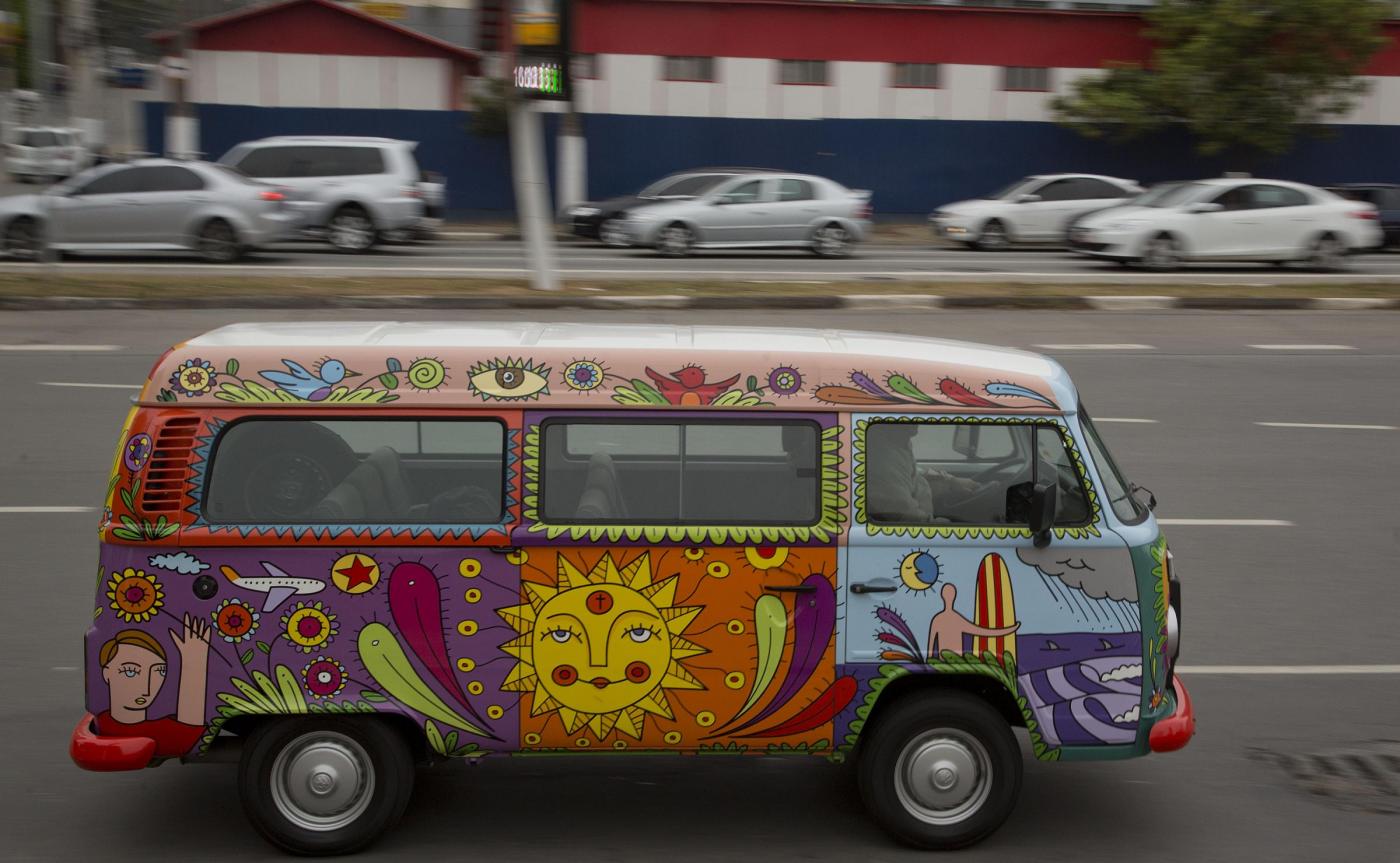
In this Sept. 13, 2013 photo, a Volkswagen van is used as a makeshift food truck selling pasta dishes, in Sao Paulo, Brazil. In Brazil the VW van is known as the "Kombi," an abbreviation for the German "Kombinationsfahrzeug" that loosely translates as "cargo-passenger van." It’s used in Brazil by the postal service to haul mail, by the army to transport soldiers, and by morticians to carry corpses. It serves as a school bus for kids, operates as a group taxi, and delivers construction materials to work sites, but VW says production will end Dec. 31. (AP Photo/Andre Penner) In this Sept. 18, 2013 photo, advertising executive Marcelo Serpa drives his Volkswagen van, or Kombi, emblazoned with a "rolling mural," that he painted, through the streets of Sao Paulo, Brazil. Serpa's 2007 VW van version is meant to have a 1960s American hippie feel. He painted it in bright green, yellow, blue and red colors with cartoon-like drawings of his wife, daughters, and himself, surfboard in hand. Serpa said the bus evokes "a spirit of playfulness and happiness," causing people to pause and smile when he drives it down Sao Paulo's chaotic streets.(AP Photo/Andre Penner) In this Sept. 3, 2013 photo, a vendor unloads a bouquet of flowers from her Volkswagen van, at a street market in Sao Paulo, Brazil. In Brazil the VW van is known as the "Kombi," an abbreviation for the German "Kombinationsfahrzeug" that loosely translates as "cargo-passenger van." It’s used in Brazil by the postal service to haul mail, by the army to transport soldiers, and by morticians to carry corpses. It serves as a school bus for kids, operates as a group taxi, and delivers construction materials to work sites, but VW says production will end Dec. 31. (AP Photo/Andre Penner) In this Aug. 29, 2013 photo, people dine at the Nakombi restaurant in, in Sao Paulo, Brazil. Nakombi, which translates from Portuguese as, "In the Kombi," is a Japanese restaurant inspired in the design of the Volkswagen van, known as the "Kombi," in Brazil, an abbreviation for the German "Kombinationsfahrzeug" that loosely translates as "cargo-passenger van." (AP Photo/Andre Penner) In this Sept. 3, 2013 photo, Jorge Hanashiro and his wife Ana, prepare deep fried meat and vegetable pastry pies at an open-air market, with their light green 1974 Volkswagon van or Kombi, parked nearby, in Sao Paulo, Brazil. "There may be safer and more modern cars around, but for me the Kombi is the best vehicle to transport my stall and products to the six open air markets I visit each week," the 77-year-old Hanashiro said. "It is economical, rugged and easy to repair." (AP Photo/Andre Penner)

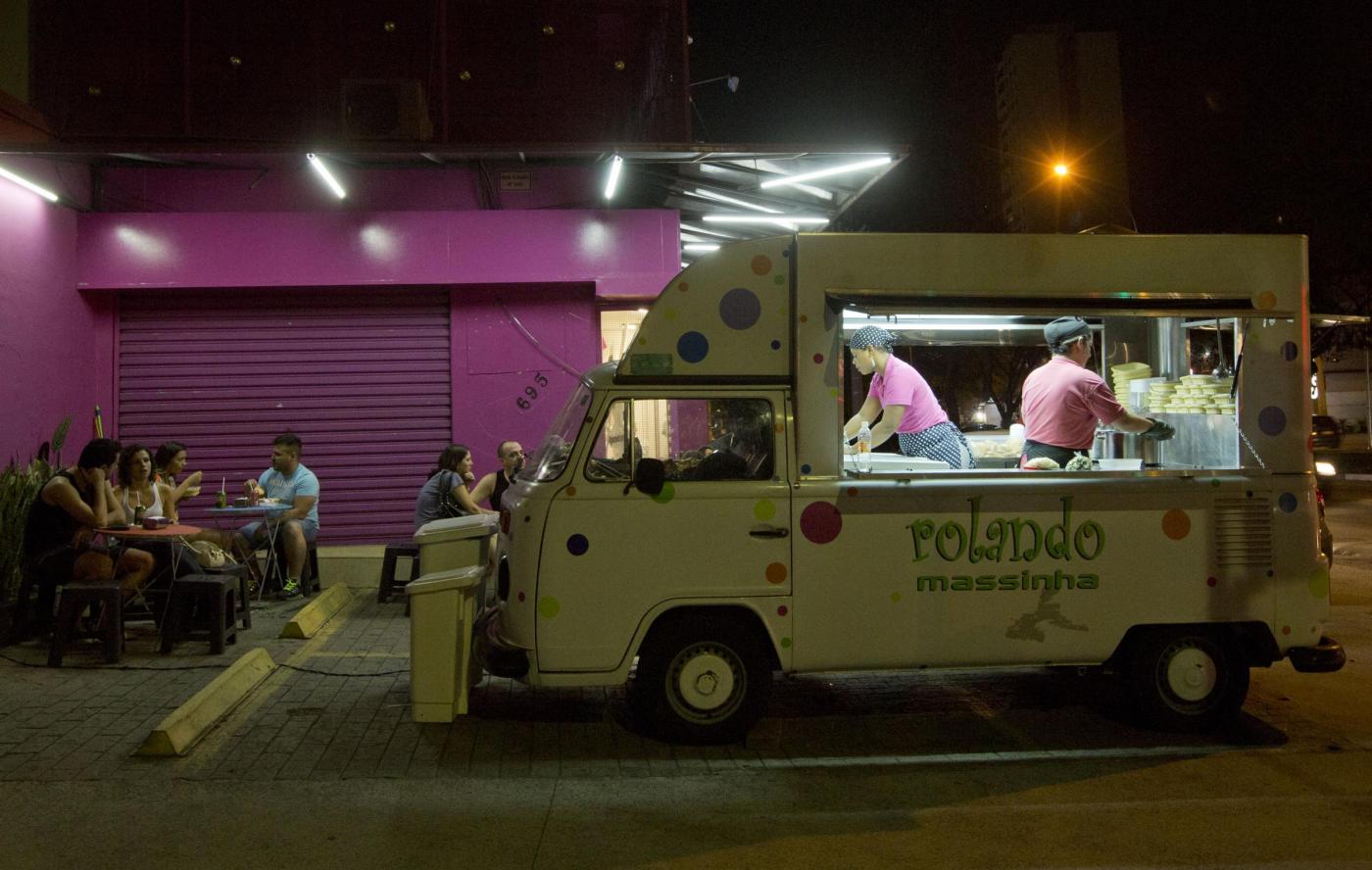 In this Sept. 13, 2013 photo, a Volkswagen van is used as a makeshift food truck selling pasta dishes, in Sao Paulo, Brazil. In Brazil the VW van is known as the "Kombi," an abbreviation for the German "Kombinationsfahrzeug" that loosely translates as "cargo-passenger van." It’s used in Brazil by the postal service to haul mail, by the army to transport soldiers, and by morticians to carry corpses. It serves as a school bus for kids, operates as a group taxi, and delivers construction materials to work sites, but VW says production will end Dec. 31. (AP Photo/Andre Penner)
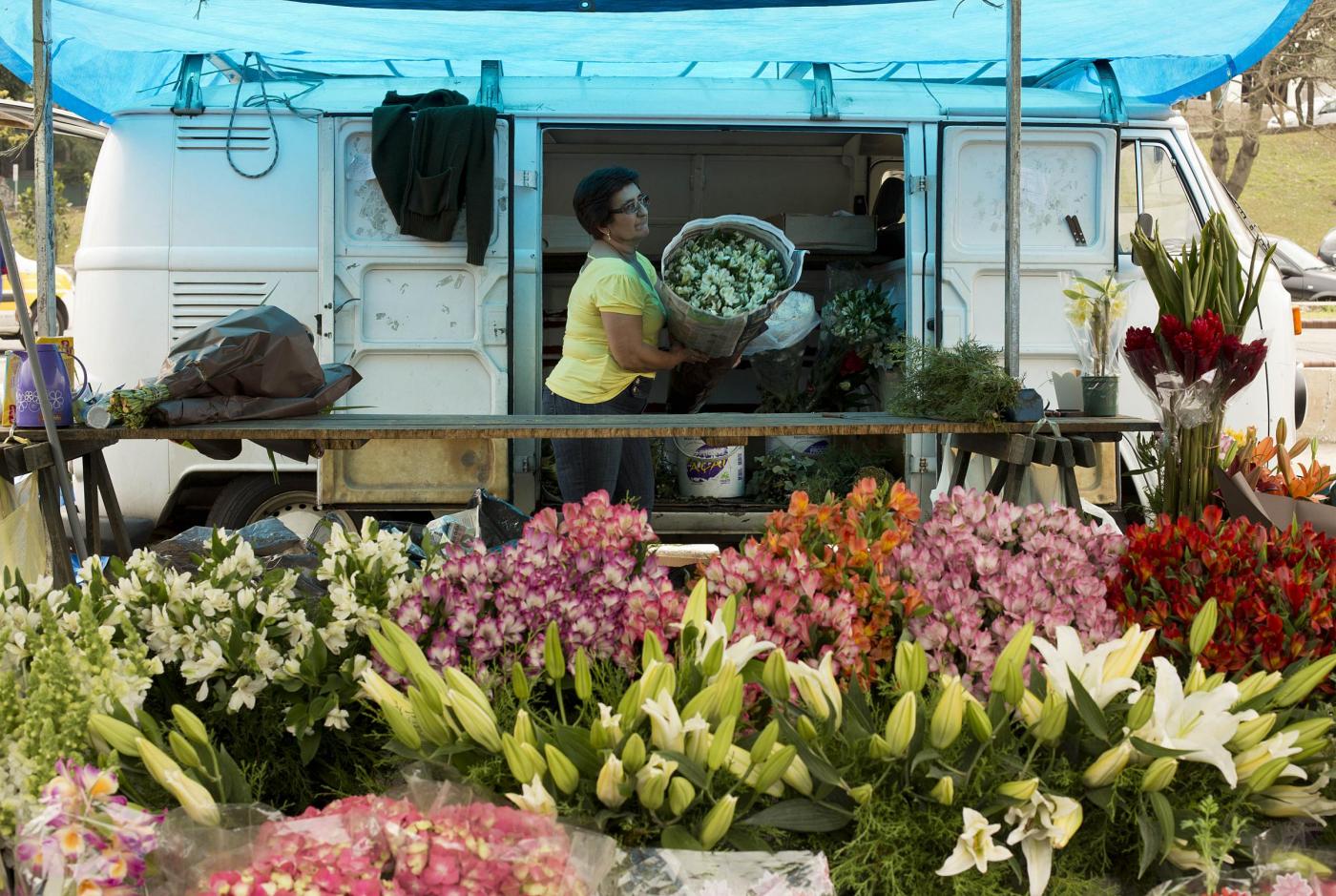 In this Sept. 3, 2013 photo, a vendor unloads a bouquet of flowers from her Volkswagen van, at a street market in Sao Paulo, Brazil. In Brazil the VW van is known as the "Kombi," an abbreviation for the German "Kombinationsfahrzeug" that loosely translates as "cargo-passenger van." It’s used in Brazil by the postal service to haul mail, by the army to transport soldiers, and by morticians to carry corpses. It serves as a school bus for kids, operates as a group taxi, and delivers construction materials to work sites, but VW says production will end Dec. 31. (AP Photo/Andre Penner)
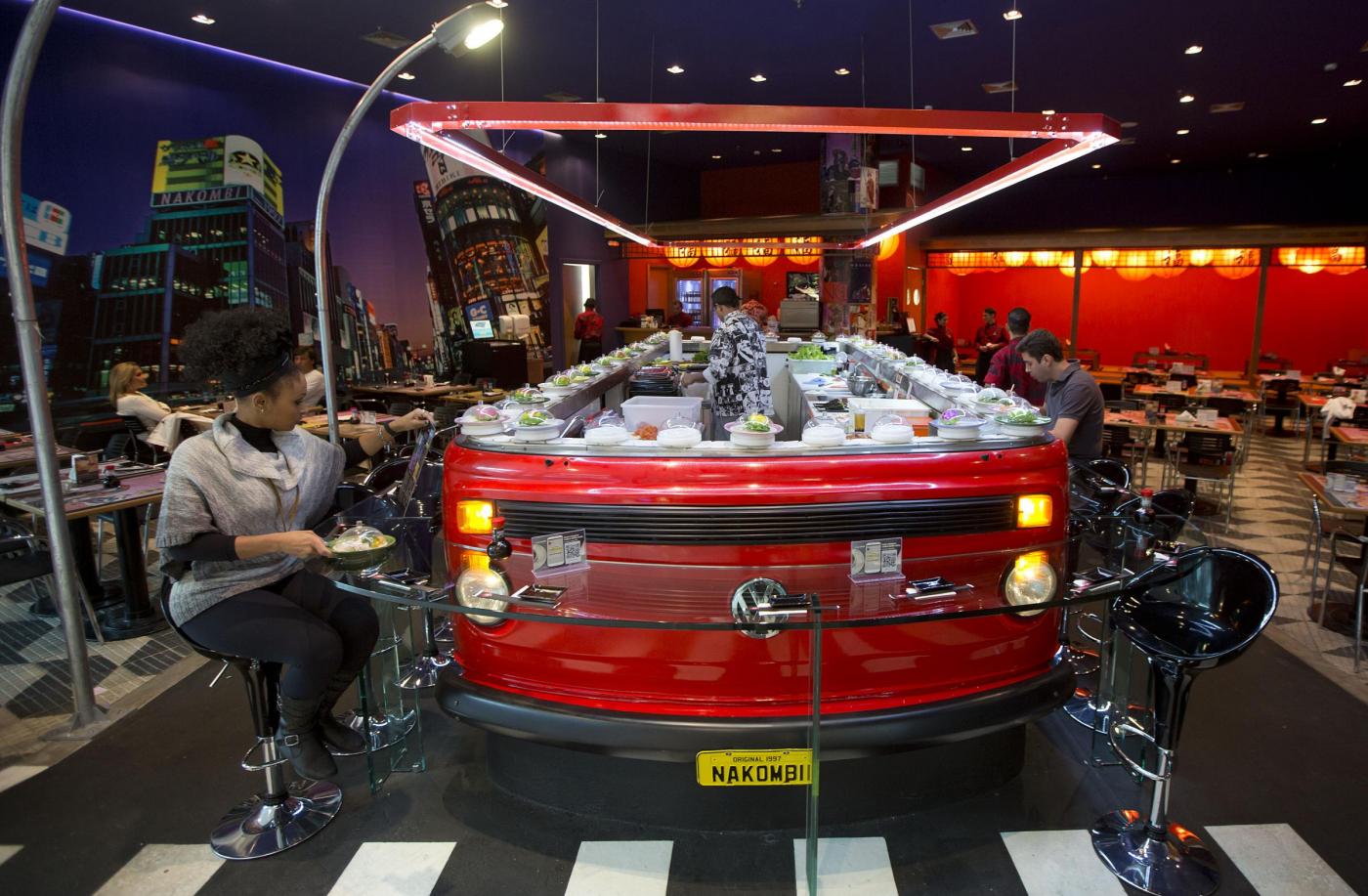 In this Aug. 29, 2013 photo, people dine at the Nakombi restaurant in, in Sao Paulo, Brazil. Nakombi, which translates from Portuguese as, "In the Kombi," is a Japanese restaurant inspired in the design of the Volkswagen van, known as the "Kombi," in Brazil, an abbreviation for the German "Kombinationsfahrzeug" that loosely translates as "cargo-passenger van." (AP Photo/Andre Penner)
 In this Sept. 17, 2013 photo, street vendor Marcos Yoshiga uses his Volkswagen van to transport his crates of eggs to sell at a street market in Sao Paulo, Brazil. Brazil is the last place in the world still producing the iconic vehicle, or "bus" as it's known by aficionados, but VW says production will end Dec. 31. In Brazil it's known as the "Kombi," an abbreviation for the German "Kombinationsfahrzeug" that loosely translates as "cargo-passenger van." (AP Photo/Andre Penner)
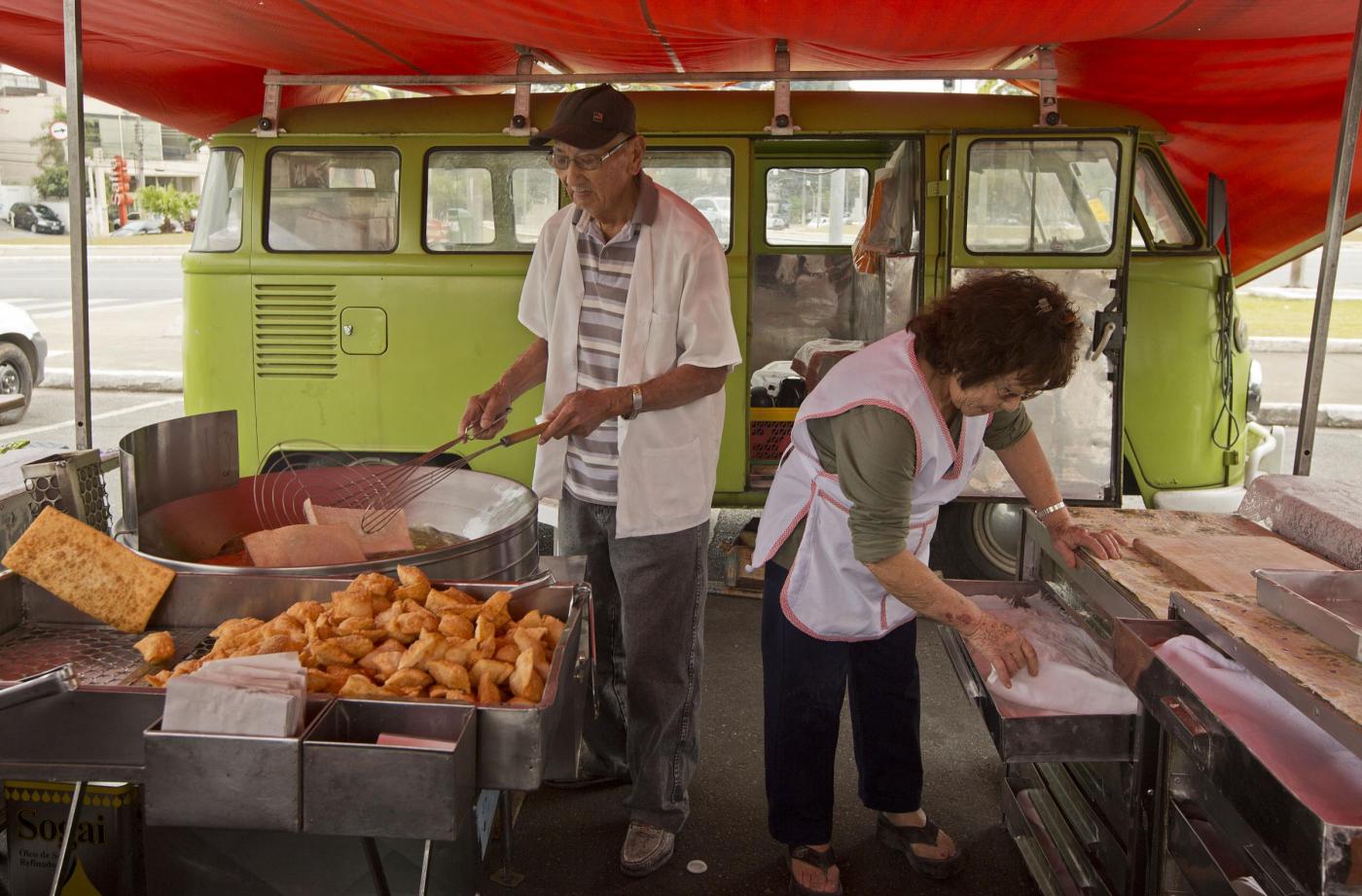 In this Sept. 3, 2013 photo, Jorge Hanashiro and his wife Ana, prepare deep fried meat and vegetable pastry pies at an open-air market, with their light green 1974 Volkswagon van or Kombi, parked nearby, in Sao Paulo, Brazil. "There may be safer and more modern cars around, but for me the Kombi is the best vehicle to transport my stall and products to the six open air markets I visit each week," the 77-year-old Hanashiro said. "It is economical, rugged and easy to repair." (AP Photo/Andre Penner)